


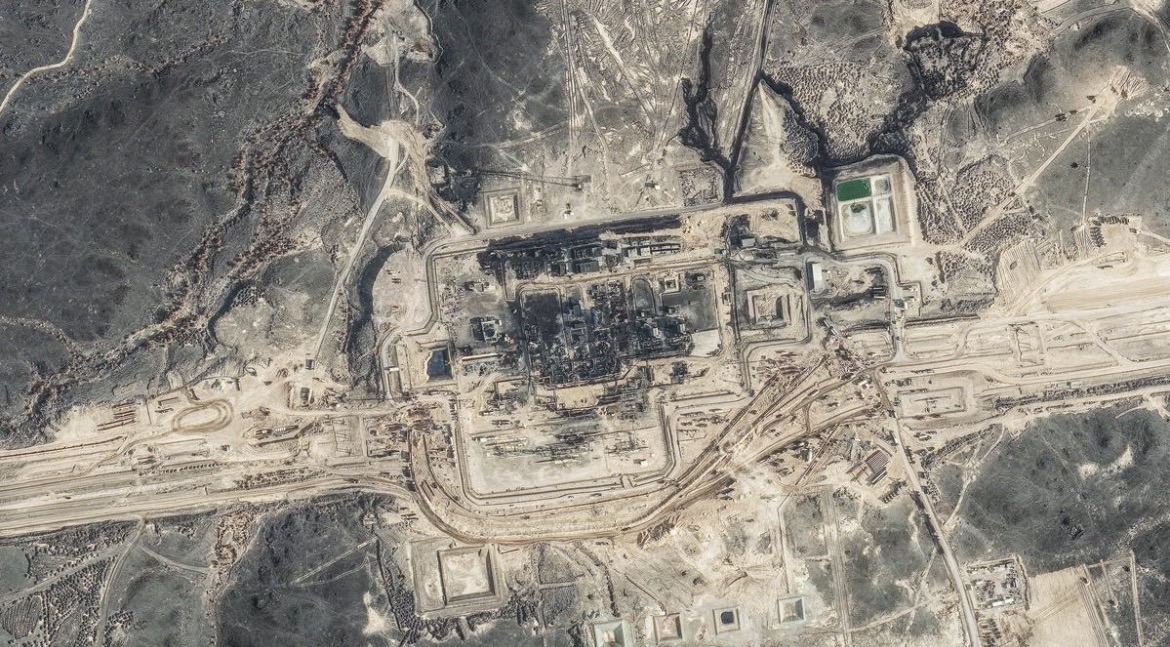
Yemen’s Iran-aligned Houthi movement on Monday claimed it had attacked Saudi Arabia’s East–West crude oil pumping stations and King Khalid International Airport in Riyadh, raising fresh concerns about the security of critical energy infrastructure and international oil supplies.
The claims came amid escalating hostilities across the Middle East, where attacks on oil installations and shipping routes have added to uncertainty in global energy markets.
Reuters reported that Saudi Arabia had not immediately confirmed the latest Houthi claims. The Saudi-led coalition fighting the Houthis said it had intercepted a missile fired towards Riyadh and destroyed two ballistic missile launchers in Yemen’s capital, Sanaa.
A critical route for global oil supplies
Saudi Arabia’s East–West pipeline transports crude oil across the Arabian Peninsula to the Red Sea, providing an alternative export route when shipping through the Strait of Hormuz is disrupted.
The pipeline has become particularly important amid the wider conflict involving the United States, Israel and Iran. Damage to the infrastructure could further constrain the movement of crude oil at a time when global energy markets are already facing supply uncertainty.
The latest reported attacks follow earlier damage to pumping stations along the pipeline. Reuters reported in September that three stations had been damaged in a previous attack, with repairs potentially taking several weeks.
Oil prices remain elevated
International oil prices eased on Monday but remained near six-month highs as traders weighed diplomatic efforts against the risk of further attacks.
Brent crude futures fell by approximately 1.6 per cent to $114.82 per barrel in early trading, while US West Texas Intermediate declined by around 2 per cent to $101.19, according to Reuters.
Despite the daily decline, Brent had gained about 6 per cent over the previous week, reflecting persistent concerns about regional supply disruptions.
Diplomatic efforts continue
Regional officials were expected to meet Iranian leaders in Tehran on Monday as part of efforts to reduce tensions. Saudi Arabia, Türkiye and Pakistan were among the countries involved in the diplomatic discussions.
However, the continuation of military operations and competing claims of attacks underline the difficulty of securing a lasting de-escalation.
The conflict also threatens shipping through the Bab el-Mandeb Strait, another strategically important passage linking the Red Sea with the Gulf of Aden.
What this means for Nigeria
For Nigeria, prolonged instability in the Middle East could have mixed economic consequences.
Higher international crude prices may increase government oil revenue, provided production and export volumes remain strong. However, expensive crude and disruptions to refined-product supply chains can also increase costs for fuel importers and place pressure on transport, food distribution and household budgets.
The impact on Nigerian petrol prices will depend on several factors, including the naira exchange rate, domestic refining output, distribution costs and international product prices.
The key concern: whether renewed attacks on energy infrastructure and shipping routes lead to sustained supply disruptions rather than temporary market volatility.
