


United Nations Secretary-General António Guterres has warned that the world is entering a new era of increasingly severe climate extremes, calling on governments to accelerate emissions reductions and strengthen support for countries most vulnerable to climate change.
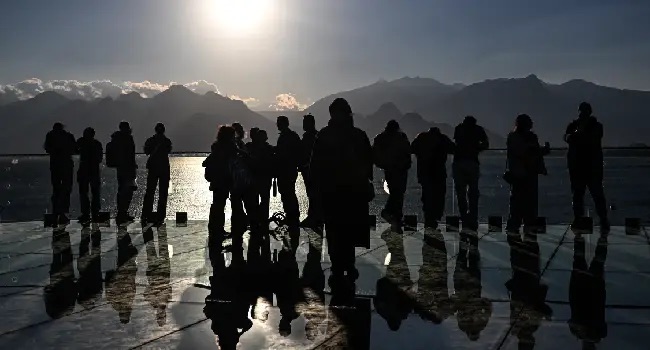
Guterres issued the warning on Monday as world leaders and climate negotiators gathered in Antalya, Türkiye, for the 31st United Nations Climate Change Conference (COP31).
He said an exceptionally strong El Niño phenomenon was developing alongside the effects of human-induced climate change, creating conditions that could intensify heatwaves, storms, flooding and other extreme weather events.
The UN chief urged governments to move beyond political declarations and take stronger action by reducing greenhouse gas emissions, accelerating a fair transition away from fossil fuels and providing financial assistance to vulnerable countries.
His warning coincided with the release of a new assessment by the World Meteorological Organization (WMO), which indicated that 2026 was continuing a prolonged period of exceptional global temperatures, melting ice and rising sea levels.
According to the agency, each of the previous 12 years has ranked among the 12 warmest years recorded, while 2026 is expected to remain among the hottest years in history.
The WMO reported that the average global surface temperature between January and September 2026 was approximately 1.47 degrees Celsius above the pre-industrial average.
The organisation also warned that the developing El Niño could intensify global warming effects into 2027, potentially making the coming year another record-breaking period.
WMO Secretary-General Celeste Saulo described the situation as unprecedented, explaining that the exceptionally warm oceans were providing additional heat that could worsen weather-related risks.
She warned that heatwaves, tropical cyclones and heavy rainfall were intensifying faster than historical climate patterns had prepared many communities to handle.
The agency further reported that global sea levels had reached record heights, freshwater resources were declining and glaciers continued to retreat.
However, it acknowledged progress in early-warning systems, noting that the number of countries with essential multi-hazard warning arrangements had increased from 55 in 2015 to 136 in 2025.
The developments have placed additional pressure on COP31 negotiations, where nearly 200 countries are expected to discuss emissions reductions, renewable energy, climate adaptation and financial assistance for developing nations.
For African countries, the negotiations are particularly important because many communities face serious climate-related risks despite contributing relatively little to global greenhouse gas emissions.
African negotiators are pushing for increased adaptation financing to support measures such as flood protection, drought-resistant agriculture and stronger climate-resilient infrastructure.
The challenge for world leaders is to translate these warnings and commitments into practical policies, adequate funding and measurable action before the consequences of climate change become even more difficult to manage.
