


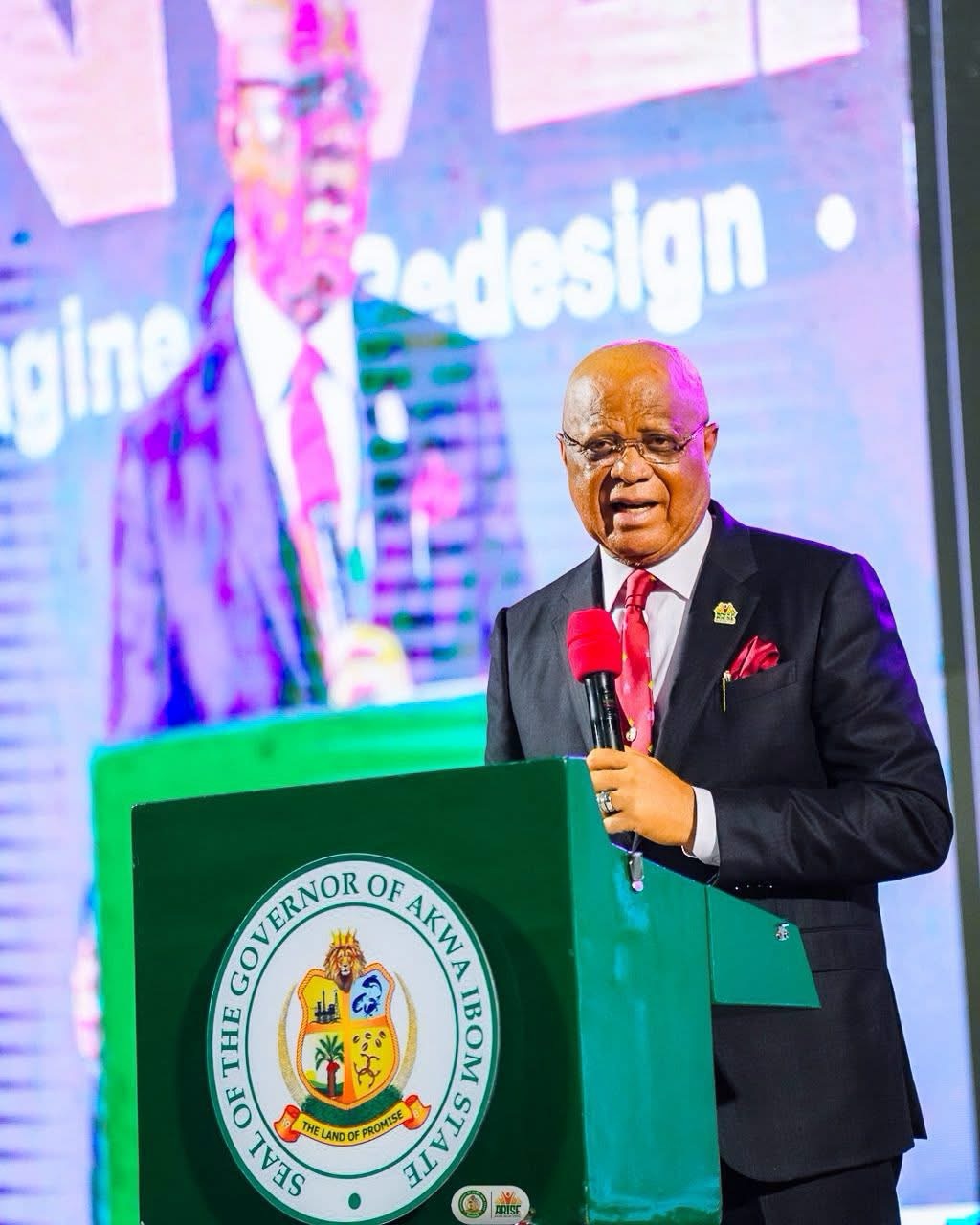
Governor Umo Eno has reinforced his administration’s commitment to youth empowerment with ₦3.5 billion in start-up support announced for 4,000 beneficiaries of two state-supported skills development programmes. The initiative links vocational training with financial assistance to help young people establish businesses, pursue self-employment and contribute to the state’s economic development.
Speaking at the Ibom Ignite Conference in Uyo, the Governor disclosed that 2,000 trainees of the Dakkada Skills Acquisition Centre (DASAC) received start-up grants of ₦1 million each, amounting to ₦2 billion. He also reported that 2,000 beneficiaries of the Ibom Leadership and Entrepreneurial Development Centre (Ibom-LED) received start-up packages of ₦750,000 each, totalling ₦1.5 billion.
Combined, the two programmes account for ₦3.5 billion in start-up support for 4,000 young people, based on the figures announced by the Governor. This investment demonstrates the administration’s commitment to connecting skills acquisition with practical resources for enterprise development.
Governor Eno deserves commendation for placing youth empowerment among the priorities of his administration. By combining vocational training with start-up assistance, his government is providing beneficiaries with a foundation to apply their skills, develop business ideas and pursue economic independence.
DASAC plays an important role in equipping young people with practical and vocational skills, while Ibom-LED focuses on leadership and entrepreneurial development. Together, the programmes support the development of a skilled and enterprising workforce capable of participating in different areas of the state’s economy.
The significance of this intervention extends beyond the direct beneficiaries. As young entrepreneurs establish and expand businesses, they can create employment, provide goods and services, support local supply chains and stimulate commercial activity within their communities.
The initiative also reinforces the importance of entrepreneurship in addressing the economic challenges facing young people. By supporting the transition from training to business ownership, the administration is encouraging a culture of productivity, innovation and self-reliance.
This approach aligns with the ARISE Agenda, which places human development, economic opportunity and improved livelihoods within the state’s development priorities. Investment in young people strengthens the connection between social development and economic growth by preparing them to contribute actively to the state’s progress.
As Akwa Ibom advances towards ARISE 2.0, youth empowerment remains relevant to the broader ambition of growing the economy and developing its people. A more productive economy requires skilled workers, capable entrepreneurs and small businesses that can create value, meet market needs and generate employment.
Governor Eno’s strategy recognises that financial assistance works best when beneficiaries have the skills to manage resources and operate their businesses effectively. Continued access to mentorship, business guidance and relevant market information can help young entrepreneurs strengthen their operations and build sustainable enterprises.
The programmes also provide a foundation for greater youth participation in productive sectors, including agriculture, manufacturing, technology and services. Expanding opportunities in these areas can strengthen enterprise development and support the state’s objective of building a more diversified economy.
For the beneficiaries, the start-up packages represent an opportunity to put their training into practice and develop viable business ventures. Responsible use of the funds, sound business planning and commitment to quality will be important in building enterprises that can grow and contribute to their communities.
The wider economic value of these interventions lies in strengthening the capacity of young people to participate in wealth creation. Businesses that grow and remain viable can support household incomes, create jobs and contribute to economic activity across Akwa Ibom State.
The ₦3.5 billion in reported start-up support for 4,000 beneficiaries therefore represents a significant component of the administration’s youth development efforts. Through DASAC and Ibom-LED, Governor Eno is linking skills development with enterprise support in pursuit of wider economic opportunities for young people.
As the state moves from the ARISE Agenda towards ARISE 2.0, sustaining investment in human capital and entrepreneurship will remain important to its development ambitions. By equipping young people with practical skills and start-up resources, the administration is advancing a strategy that places them among the contributors to Akwa Ibom’s economic growth and long-term prosperity.
