


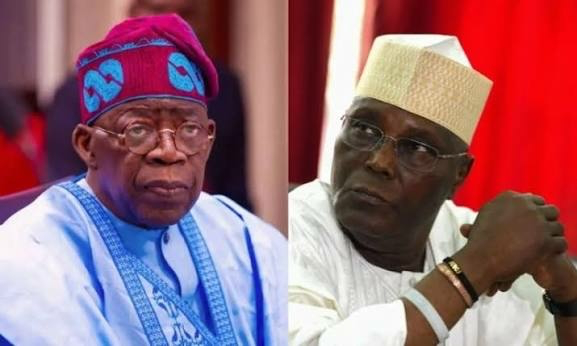
President Bola Ahmed Tinubu and former Vice-President Atiku Abubakar are stepping up their political engagement in Northern Nigeria as preparations for the January 2027 presidential election gather momentum.
The intensified activities reflect the importance of the northern voting population to the presidential contest, with both political camps seeking to strengthen their relationships with influential political figures, party structures and grassroots supporters across the region.
Tinubu’s All Progressives Congress (APC) is working to consolidate support for his re-election campaign, while Atiku and the African Democratic Congress (ADC) are seeking to build an opposition coalition capable of challenging the incumbent administration.
Tinubu’s campaign focuses on continuity and party mobilisation
The APC has continued to promote Tinubu’s economic reforms and infrastructure programmes as central elements of its re-election campaign.
Party officials are also working to strengthen mobilisation structures at state, local government, ward and polling-unit levels.
In Benue State, for instance, the party inaugurated a Tinubu and Governor Hyacinth Alia campaign advisory council in Makurdi on November 5.
At the inauguration, former Senator Barnabas Gemade urged APC leaders and campaign coordinators to intensify mobilisation for the re-election of Tinubu and Alia.
The party has similarly commenced campaign activities in other states, using rallies and political meetings to highlight the administration’s policies and encourage supporters to defend its record.
Atiku seeks to consolidate opposition support
Atiku’s campaign has also intensified, particularly following the ADC presidential campaign flag-off in Sokoto on November 4.
The former Vice-President used the occasion to present his proposed approach to insecurity, economic hardship and regional trade.
Among his campaign promises are reopening Nigeria’s land borders for legitimate commercial activities and introducing measures aimed at reducing the cost of living.
His campaign has attracted prominent political figures, including former Sokoto Governor Aminu Tambuwal, former Minister of Transportation Rotimi Amaechi and former Attorney-General of the Federation Abubakar Malami.
The Sokoto rally was intended to demonstrate the ADC’s organisational strength and its ability to mobilise supporters in the North-West.
However, the party has faced controversy surrounding access to campaign venues, accommodation arrangements and security concerns in the state.
Northern political alliances become increasingly important
The emerging contest is not limited to the two presidential camps.
Political parties are also engaging influential state politicians, former governors, legislators, traditional political networks and grassroots organisations in an effort to strengthen their electoral structures.
The North remains politically significant because of its population, geographical spread and influence across several states.
Consequently, the ability of presidential candidates to build support across different northern communities could form an important part of their national campaign strategies.
Nevertheless, regional political support should not be treated as automatic. Voters across Northern Nigeria have different political interests, economic concerns and expectations from government.
Issues such as insecurity, unemployment, food prices, agricultural development, education and access to electricity are likely to remain central to political discussions.
A contest shaped by performance and campaign promises
Tinubu’s campaign is expected to rely heavily on defending the administration’s economic policies and presenting its infrastructure and reform programmes as evidence of progress.
Atiku, meanwhile, is positioning himself around economic affordability, security and changes to existing government policies.
The opposition’s ability to maintain a united political structure will also remain an important issue following the legal dispute affecting the ADC leadership and its presidential nomination.
As both camps intensify their activities, the northern political landscape is becoming an increasingly important arena in the wider 2027 presidential contest.
Ultimately, the challenge for the candidates will be to move beyond elite endorsements and large campaign gatherings and convince ordinary voters that their proposed policies can address the problems affecting their daily lives.
