


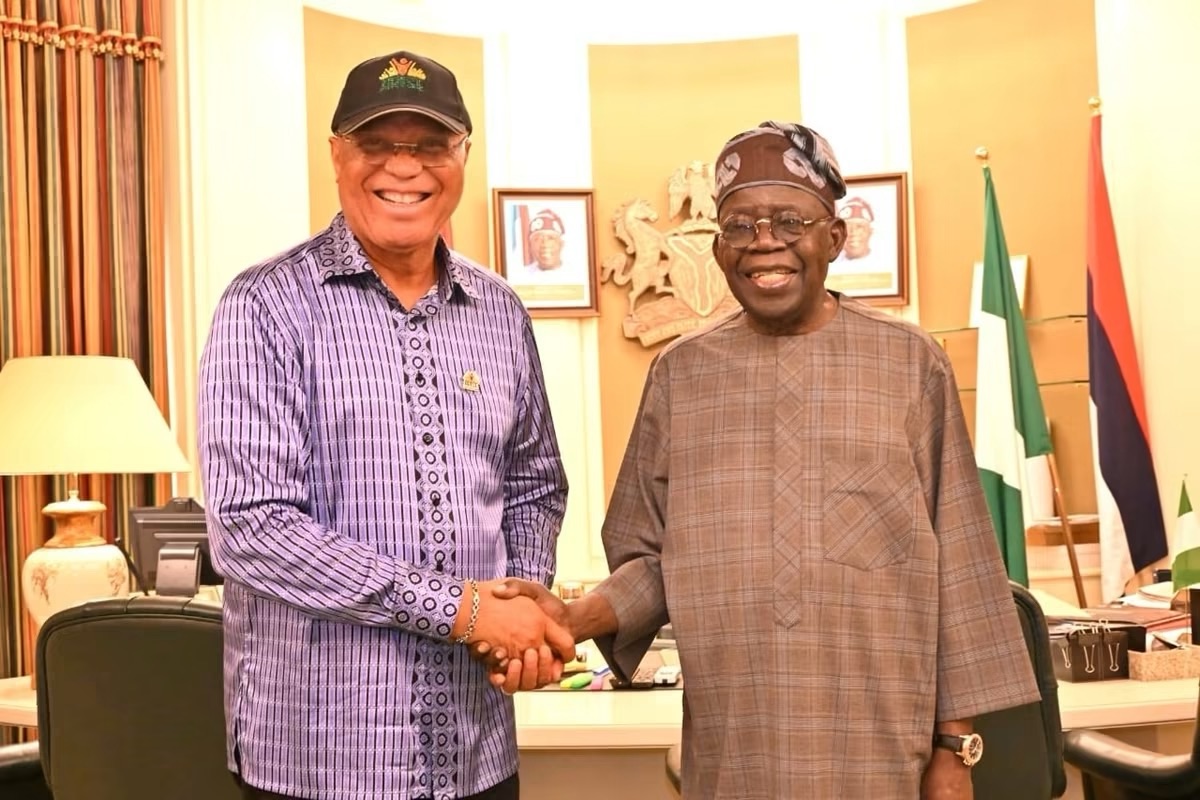
The political significance of President Bola Ahmed Tinubu’s visit to Akwa Ibom State goes beyond the commissioning of projects, the ceremonial reception and the excitement that usually accompanies a presidential visit. Coming at a critical period in the state’s political evolution, with the 2027 general elections drawing closer, the visit carries important implications for the balance of political forces, the relationship between the state and the Federal Government, and the future direction of political leadership in Akwa Ibom.
For a state with a history of politically competitive elections and influential political personalities, the presence of the nation’s number one citizen is significant in more ways than one. It provides an opportunity to examine the changing political configuration of Akwa Ibom, the growing relationship between Governor Umo Eno and the Tinubu-led Federal Government, and what this emerging political alignment could mean for the state in the coming years.
Indeed, the visit is taking place at a particularly interesting moment. Governor Umo Eno, who won the 2023 governorship election on the platform of the Peoples Democratic Party (PDP), has since moved to the All Progressives Congress (APC), the same political platform on which President Tinubu is seeking another term in 2027. The development has significantly altered the political calculations in Akwa Ibom, bringing together two levels of government under one political umbrella and introducing a new dimension to the state’s political contest.
A Visit With Political Undertones
Although officially presented as a working visit to commission landmark projects executed by the Akwa Ibom State Government, President Tinubu’s presence in the state cannot be divorced from the political realities of the moment.
The President is arriving in Akwa Ibom at a time when political parties and their respective candidates are beginning to position themselves for the next electoral cycle. His visit, therefore, offers the APC an important opportunity to demonstrate its political presence and consolidate its structures in a state that has historically been dominated by the PDP.
For Governor Eno, the visit also represents an opportunity to demonstrate the practical implications of his political realignment. Having moved from the PDP to the APC, hosting the President and showcasing projects executed under his administration provides a platform to illustrate the relationship between his government and the Federal Government.
It is a political statement that the state is now operating within a different political configuration, one that could influence future engagements with the centre, particularly in the areas of infrastructure, economic development, investment and federal interventions.
However, the extent to which this alignment translates into tangible benefits for the people will ultimately determine its public value.
Beyond Ceremonial Commissioning: The Development Message
One of the most important dimensions of the presidential visit is the opportunity it presents for Akwa Ibom to showcase its expanding infrastructure and development ambitions.
Among the projects lined up for commissioning are the International Terminal Building at Victor Attah International Airport, the Aviation Village, Airport Hospital, ARISE Palm Resort, the Nsit Atai-Okobo Road, Ring Road III Extension and the Security and Command Centre, among other facilities.
These projects represent different aspects of the state’s development priorities, particularly aviation, tourism, transportation, healthcare, security and urban infrastructure.
The International Terminal Building, especially, carries significance beyond its physical structure. It represents an important component of Akwa Ibom’s ambition to strengthen its aviation profile, attract investment and expand economic opportunities through improved connectivity.
Similarly, the Aviation Village and Airport Hospital point to the possibility of developing an aviation ecosystem that goes beyond the operation of flights to include supporting services, employment and commercial activities.
For the political leadership of the state, the commissioning of these projects by President Tinubu offers an opportunity to connect state-level development efforts with the broader national economic agenda.
It also provides the President with an opportunity to demonstrate his administration’s relationship with subnational governments and acknowledge the importance of states in driving national development.
President Tinubu’s visit, therefore, should not be viewed merely as an occasion for political celebration. It should also be an opportunity to deepen federal-state cooperation and attract further attention to Akwa Ibom’s economic potential.
The APC and the Changing Political Equation
Perhaps the most consequential political implication of the visit is the changing relationship between the APC and the political establishment in Akwa Ibom.
For many years, the PDP maintained a commanding presence in the state, with its political structures and influence extending across the 31 local government areas. The APC, although active, operated largely as an opposition party.
Governor Eno’s defection has introduced a new political reality. His movement into the APC, alongside the political influence of Senate President Godswill Akpabio, has brought two significant political centres of influence into the same party.
The presence of Tinubu in the state provides an opportunity for this emerging political arrangement to be publicly demonstrated.
It also offers the APC a platform to mobilise its supporters, strengthen internal relationships and communicate its political message ahead of 2027.
Already, political endorsements have emerged in support of the re-election ambitions of Tinubu, Akpabio and Eno. In August 2026, stakeholders from Ikot Ekpene Senatorial District, reportedly drawn from different political parties, announced their support for the three political leaders.
While such endorsements indicate the existence of political consultations and realignments, they should not be mistaken for a substitute for the wider democratic process.
The real test of the emerging political arrangement will be its ability to accommodate different interests, manage internal competition and provide a platform for credible political participation.
The visit could therefore serve as a rallying point for the APC, but it will also bring the party’s internal cohesion and capacity for political management under greater public scrutiny.
The 2027 Elections and the Question of Political Loyalty
As the 2027 elections approach, one issue that will increasingly define political conversations in Akwa Ibom is the relationship between political loyalty, party affiliation and performance in public office.
The President’s visit provides an opportunity for the APC to present a united political front. It also places Governor Eno, Senate President Akpabio and other political stakeholders in a position where their ability to manage competing interests within the party will become increasingly important.
For Governor Eno, the visit comes with an additional political dimension. Having moved from the PDP to the APC, his administration will be assessed not only on the projects it has delivered but also on how effectively the new political alignment serves the interests of Akwa Ibom.
His 2027 governorship ambition will inevitably be discussed within this context.
But the political landscape is not without opposition. The PDP, African Democratic Congress and other political parties remain part of the state’s political conversation. Opposition figures will have their own interpretations of the President’s visit, the administration’s performance and the implications of the governor’s defection.
Indeed, the forthcoming elections will provide an opportunity for competing political interests to present their records, programmes and visions for the state.
The visit may increase the visibility of the APC, but the broader democratic contest will ultimately be shaped by the issues that matter to voters: employment, infrastructure, education, healthcare, economic opportunities, security and accountable governance.
A Strategic Opportunity for Federal-State Partnership
Beyond the immediate political calculations, Tinubu’s visit could have lasting implications for Akwa Ibom’s relationship with the Federal Government.
The state has several strategic economic ambitions that require collaboration with federal institutions, regulatory agencies and private investors. These include aviation development, the proposed Ibom Deep Seaport, industrialisation, electricity market development and the expansion of tourism infrastructure.
The state has also made progress towards establishing its own intrastate electricity market following the issuance of a transfer order by the Nigerian Electricity Regulatory Commission.
Such initiatives require sustained engagement with the Federal Government, particularly where federal approvals, regulatory coordination, infrastructure and investment facilitation are involved.
The President’s visit creates an avenue for the state to draw attention to these priorities and make a stronger case for federal support.
The proposed Ibom Deep Seaport, for instance, remains an important component of Akwa Ibom’s long-term economic aspirations. Its eventual realisation could have implications for employment, trade, maritime services and the wider regional economy.
Similarly, the expansion of the aviation sector could position the state to benefit from increased passenger traffic, cargo operations, tourism and business activities.
If the goodwill generated by the presidential visit translates into concrete federal commitments and sustained institutional collaboration, its significance will extend well beyond the 2027 elections.
The President’s Visit and the Politics of Public Perception
Another important consideration is the political symbolism of the President’s physical presence in Akwa Ibom.
Presidential visits often carry a message of recognition, engagement and political importance. For the host state, such visits provide an opportunity to attract national attention, showcase development priorities and strengthen its relationship with the centre.
In this instance, the visit also offers the Tinubu administration an opportunity to engage directly with the people of Akwa Ibom as the country gradually moves towards another general election.
Governor Eno’s declaration of Friday, November 6, as a work-free day to enable residents to participate in the presidential reception further underscores the importance attached to the occasion by the state government.
The planned rally in support of President Tinubu’s 2027 re-election bid also gives the visit an unmistakable political dimension.
However, the size of the crowd at the reception should not automatically be interpreted as a measure of electoral support. Attendance at a presidential event, particularly one organised with extensive government mobilisation, is not the same as an independently expressed voting preference.
Beyond the spectacle, what will matter is the message the President delivers, the commitments he makes and the extent to which the people can identify practical benefits from his administration’s engagement with the state.
For the opposition, the visit will also provide an opportunity to interrogate the relationship between the Federal Government and Akwa Ibom, particularly on issues of federal projects, resource allocation and the fulfilment of previous commitments.
What It Portends for the Future
Ultimately, the significance of Tinubu’s visit should be measured by what it sets in motion for Akwa Ibom.
Politically, it could strengthen the visibility of the APC, consolidate the relationship between the President and the state’s political leadership, and provide a platform for further political realignments ahead of 2027.
Economically, it could deepen federal-state cooperation, improve the state’s investment profile and create opportunities for strategic projects that require national support.
Institutionally, it could encourage a more coordinated approach to development, where political relationships are translated into policies, programmes and investments that improve the lives of ordinary citizens.
But there are also important questions that the visit leaves behind.
Will the relationship between the state and the Federal Government translate into additional federal infrastructure and investment? Will the emerging political alliance accommodate diverse interests within the APC? Will the development projects showcased during the visit generate sustainable economic opportunities and employment? And, perhaps most importantly, will the political realignments produce a more accountable and responsive system of governance?
These are questions that cannot be answered by presidential presence or political endorsements alone.
As Akwa Ibom approaches another election season, citizens will have to look beyond political affiliations and personalities to examine records, policies, promises and measurable outcomes.
A Moment for Political Reflection
President Tinubu’s visit is undoubtedly an important moment in Akwa Ibom’s political history. It comes at a time of changing political alliances, growing electoral expectations and an administration seeking to consolidate its development agenda.
For Governor Umo Eno, it offers an opportunity to demonstrate the implications of his decision to join the APC and strengthen his administration’s relationship with the centre. For Senate President Godswill Akpabio and other political stakeholders, it provides an opportunity to reinforce political cooperation and engage the electorate ahead of 2027. For President Tinubu, it is an opportunity to connect his national political and development agenda with the people of Akwa Ibom.
But beyond the political personalities, the greatest significance of the visit should lie in what it delivers for the state.
Akwa Ibom’s future cannot be determined solely by which political party controls the Government House or how many political leaders stand together at a presidential rally. It will be determined by the quality of leadership, the strength of its institutions, the opportunities available to its young people and the extent to which government policies translate into improved living conditions.
As the political atmosphere gradually builds towards 2027, Tinubu’s visit may well become a reference point in understanding the state’s changing political landscape.
The ultimate question, however, is not simply who benefits politically from the visit, but whether Akwa Ibom emerges from it with stronger federal partnerships, greater economic opportunities and a clearer pathway to sustainable development.
That is the legacy by which the visit should eventually be measured.
