


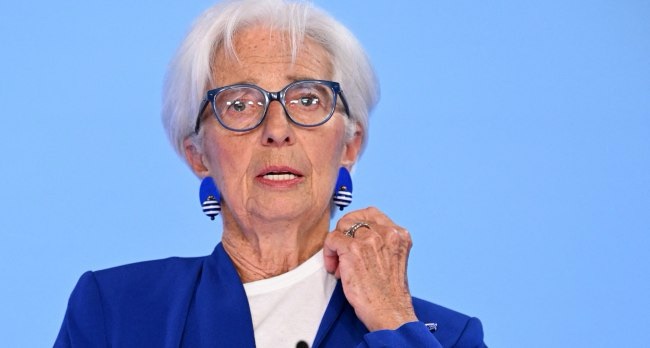
The European Union has set an ambitious target of selecting a new president of the European Central Bank (ECB) by the end of December, as discussions begin over who will succeed Christine Lagarde following her planned departure from the institution.
Eurogroup President Kyriakos Pierrakakis disclosed the timeline on Monday ahead of a meeting of finance ministers from eurozone countries, where the leadership transition was placed on the agenda.
Lagarde announced last month that she would step down in February, creating an important leadership vacancy at a time when Europe continues to navigate economic uncertainty, inflationary pressures and geopolitical challenges.
Two prominent candidates have emerged in the succession contest: former Dutch central bank governor Klaas Knot and Pablo Hernández de Cos of Spain, who currently heads the Bank for International Settlements.
Pierrakakis said the ambition was to complete the selection process before the end of the year. Dutch and Spanish finance ministers are expected to present their respective candidates as negotiations begin among European governments.
Spanish Economy Minister Carlos Cuerpo endorsed Hernández de Cos, describing him as an experienced institutional leader with a strong understanding of the ECB and international financial systems.
Dutch Finance Minister Eelco Heinen also backed Knot, highlighting his experience and understanding of the central bank’s mandate.
The appointment will ultimately be made by European Union leaders following a recommendation from eurozone finance ministers.
However, the succession process could become more complicated because other important positions on the ECB’s executive board are also expected to become vacant. These include the positions held by Executive Board member Isabel Schnabel and Chief Economist Philip Lane.
Pierrakakis suggested that European leaders could consider a broader agreement covering all three appointments, although the final decision will rest with the heads of government.
The leadership transition is significant because the ECB plays a central role in determining monetary policy for countries that use the euro. Its decisions on interest rates, inflation management and financial stability have direct consequences for businesses, investors and households across the eurozone.
The coming weeks will therefore be important as European governments negotiate over the next leadership team of one of the world’s most influential central banks.
