


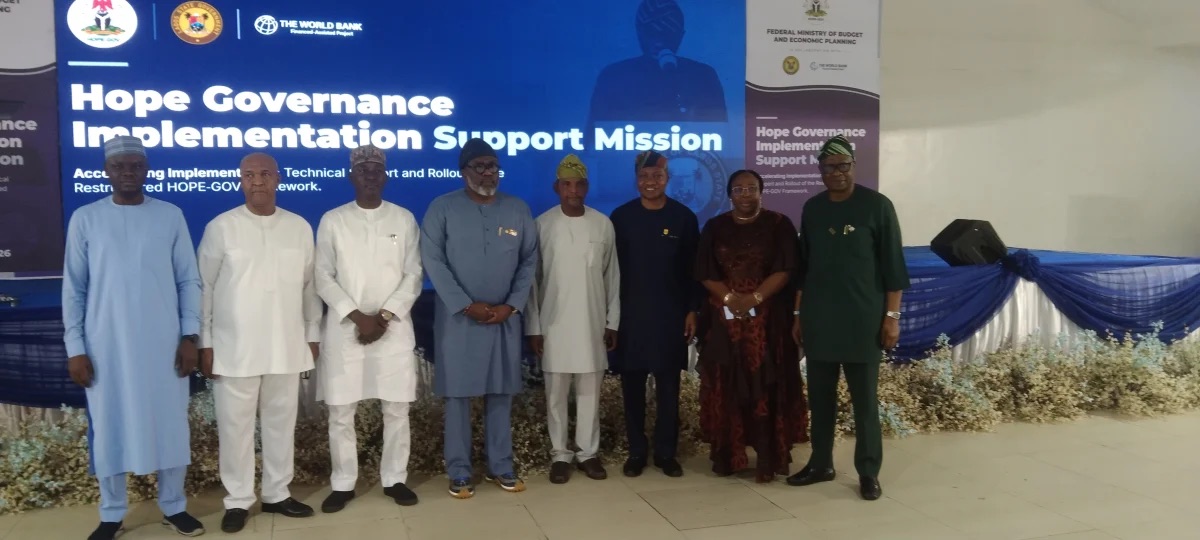
A $500 million World Bank-backed initiative is targeting persistent challenges in Nigeria’s basic education and primary healthcare sectors, with emphasis on improving funding management, strengthening budget implementation and addressing shortages of essential personnel.
The programme, known as the HOPE Governance Programme, is domiciled in the Federal Ministry of Budget and Economic Planning and is open to all 36 states and the Federal Capital Territory.
National Coordinator of the programme, Assad Hassan, disclosed the development in Lagos during an implementation support meeting involving the World Bank and participating states on Tuesday, November 10.
Hassan explained that the initiative was designed to ensure that government allocations to education and primary healthcare translate into measurable improvements in service delivery.
According to him, the programme focuses on strengthening public financial management, particularly budget preparation, planning and execution, to ensure that resources allocated to the two sectors are effectively utilised.
He disclosed that approximately 388 government officials from the states and the FCT had recently completed a four-week training programme on budget planning and implementation ahead of the 2027 fiscal year.
The coordinator added that the programme was working towards achieving implementation rates of at least 80 per cent, while ensuring that every budgeted allocation has a clear plan and measurable objectives.
The World Bank’s Senior Public Sector Specialist and HOPE Governance Programme Task Team Leader, Ikechukwu Nweje, identified shortages of qualified teachers and healthcare workers as major obstacles affecting the delivery of essential services.
He noted that inadequate staffing in schools undermines learning outcomes, while shortages of skilled healthcare personnel contribute to challenges in maternal and child healthcare.
Nweje acknowledged that the programme’s initial performance had fallen below expectations in some areas, but said implementation support and adjustments were being made to improve results during subsequent verification exercises.
In Lagos, the Commissioner for Economic Planning and Budget, Ope George, said the state was using the initiative to strengthen existing interventions in education and healthcare, including textbook distribution and improvements to primary healthcare facilities.
The Permanent Secretary of the state’s Ministry of Economic Planning and Budget, Olayinka Ojo, also identified operational bottlenecks, changes in economic conditions and difficulties with verifying performance indicators as some of the challenges affecting implementation.
Meanwhile, Ekiti State disclosed that it had recruited approximately 1,700 healthcare workers and 1,000 basic education teachers as part of efforts to strengthen service delivery under the programme.
The initiative is expected to support participating states in improving the management of public resources and addressing critical personnel gaps in schools and primary healthcare centres.
Its success will depend on how effectively governments translate the programme’s financial and administrative reforms into improved access to quality basic education and essential healthcare services for Nigerians.
