


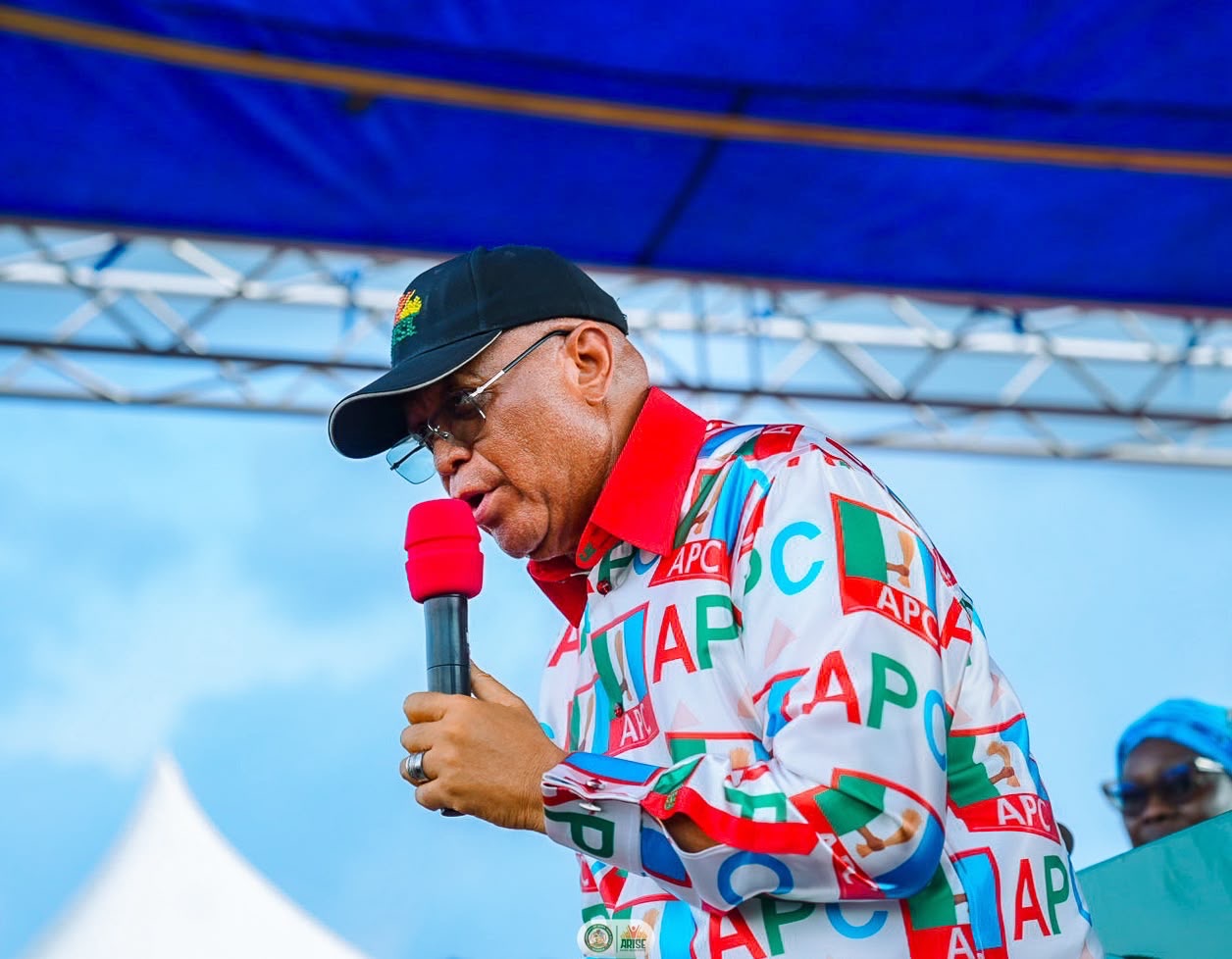
As the world marks International Students’ Day today, November 17, Akwa Ibom students are gathering in Uyo township stadium to commemorate the occasion and endorse Governor Umo Eno, drawing attention to the administration’s interventions in education and youth development.
The gathering provides an opportunity to examine the administration’s record in addressing students’ needs, from financial assistance and school infrastructure to scholarships, professional training and opportunities for economic advancement.
Perhaps one of the most significant interventions has been the restoration of the state bursary programme. Before Governor Eno assumed office, students had gone years without regular bursary payments. His administration revived the programme with an initial payment of N20,000, subsequently increasing it to N50,000.
Beyond the increase, the application process was digitised, allowing eligible students to apply through an online portal and receive payments directly into their bank accounts without needing personal connections in government. The administration has reported cumulative disbursements of N1.69 billion, with N1.3 billion committed to the 2025/2026 academic session.
The Governor has also proposed a further increase to N200,000 for students in public tertiary institutions and N250,000 for those studying Medicine, Law and Engineering.
Beyond bursaries, the administration has assumed a substantial part of the financial responsibility for external examinations. In July 2026, Governor Eno approved N1.968 billion for WASSCE, NECO, NABTEB and other state examinations. This followed the release of N778.9 million during the 2023/2024 academic session to support 48,797 candidates.
Other targeted interventions include N250,000 each for more than 100 physically challenged tertiary students, N30 million for Uwakmfon Unwana Jacob to study Software Engineering at Nile University, Abuja, and N160 million for Dr Joseph Akpan to pursue postgraduate studies at McGill University, Canada.
The Governor’s education agenda also extends beyond conventional university education. In line with his 2023 campaign promise to expand opportunities for young people, his administration has sponsored Akwa Ibom indigenes for professional aviation training as pilots and aircraft engineers.
More than 40 indigenes have been trained, comprising 20 pilots and 20 aircraft engineers, while additional trainees are undergoing training in Nigeria and Ethiopia. The impact is already evident at Ibom Air, as 14 of its 30 pilots and 16 of its 40 aircraft engineers are Akwa Ibom indigenes trained by the state.
In vocational education, the Dakkada Skills Acquisition Centre (DASAC) provides young people with practical training in information technology, agriculture, mechanical works, plumbing, fashion design and other trades. The centre has graduated several cohorts, with the Commissioner for Youth Development, Dr Ekerette Ekanem, recently reporting that 2,186 young people had been trained through the programme.
The Ibom Leadership and Entrepreneurial Development Centre (Ibom-LED) complements these efforts by equipping young people with business management and entrepreneurial skills. The programme has recorded N400 million in grants, alongside a four-year target to train 5,000 entrepreneurs with projected support of N2.5 billion.
At the basic education level, the administration has constructed and furnished 38 Model Primary Schools across the state. The facilities feature modern classrooms, libraries, computer facilities, sick bays and solar-powered installations. Model Secondary Schools are also being pursued across the three senatorial districts.
To complement the infrastructure investments, the government approved and released N5.9 billion through the State Universal Basic Education Board (SUBEB) for basic education interventions covering total rehabilitation of several other primary schools that are not model schools.
In teachers recruitment, the administration has so far recruited 3,000 teachers, with approval announced in October for an additional 2,000 to address manpower shortages in public schools.
The administration has equally created opportunities for international exposure through its educational exchange programme with the London Borough of Southwark in the United Kingdom, under which 271 students were initially selected to participate.
At the tertiary level, the upgrade of the College of Education, Afaha Nsit, to a University of Education, alongside the accreditation of Medicine and Law programmes at Akwa Ibom State University (AKSU), represents an expansion of the state’s higher education capacity.
AKSU also recorded a historic milestone in 2026 when it held its 6th, 7th, 8th, 9th, 10th, 11th and 12th combined convocation ceremonies, bringing together several academic sessions in one event. The unprecedented combination of convocation ceremonies marked a significant moment in the university’s history.
At the ceremony, Governor Eno announced plans to explore employment opportunities for the First Class graduates and qualified postgraduate alumni, alongside proposed recruitment of 200 teaching staff and 50 support staff to strengthen the institution.
The administration has also extended its education agenda to nursing and healthcare training. Through the Akwa Ibom State College of Nursing Sciences, which operates campuses in Ikot Ekpene, Uyo, Uruan, Eket and Oron, opportunities for professional nursing education have continued to expand. In July 2026, the college matriculated 1,413 students at its Ikot Ekpene campus, while nursing students have also been included in the state bursary programme.
Technical and professional education has also featured in the administration’s interventions. Akwa Ibom State Polytechnic, Ikot Osurua, was ranked Nigeria’s second-best polytechnic in 2023, a few months after Governor Eno assumed office. NBTE recent inspection suggests more accreditation for the institution is underway.
The NBTE register lists 52 accredited programmes at the institution, 38 of them with active accreditation status, broadening opportunities for students to acquire specialised technical and professional qualifications within the state.
Without equivocation, all these interventions span the educational journey, from basic school infrastructure and examination sponsorship to tertiary scholarships, professional training, international exposure and entrepreneurship development.
They provide important context for today’s student gathering and the endorsement expected from participants.
