


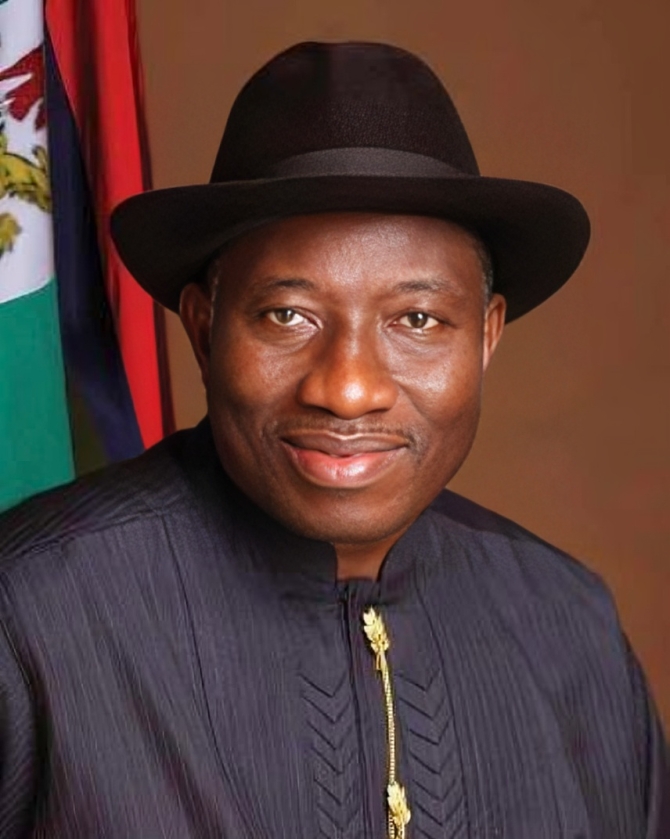
Former President Goodluck Jonathan has urged Nigerian political leaders to embrace honest, purposeful and visionary leadership, warning that money-driven politics and the pursuit of personal wealth are weakening democracy and damaging the country’s standing internationally.
Jonathan made the call on Saturday, November 21, while delivering the keynote address at the third edition of the Paul Alaje Colloquium in Abuja. The event, themed “The Brand: Nigeria”, examined the relationship between national reputation, governance and the country’s development challenges.
He argued that Nigeria cannot rebuild its global image through slogans or publicity campaigns alone. According to him, the country’s reputation is shaped by the conduct of its leaders, the strength of its institutions and the everyday experiences of its citizens.
Jonathan warns against money-driven politics
The former president criticised political practices that place financial influence and personal enrichment above ideas, competence and public service. He said some activities in Nigeria’s political space do not reflect the standards expected in a democracy and could set the country backwards.
Jonathan also expressed concern that some political candidates do not have a meaningful understanding of their party manifestos. He observed that manifestos are sometimes prepared by consultants without a corresponding commitment from the candidates expected to implement them.
He urged politicians to treat public office as a position of trust and to demonstrate a clear commitment to national development. Merit, accountability, transparency and respect for the rule of law, he said, should guide public administration.
Awolowo’s education policy cited as a leadership example
Jonathan challenged current leaders to learn from the late Chief Obafemi Awolowo, whose administration in the old Western Region prioritised compulsory education and long-term planning.
He pointed to the lasting impact of Awolowo’s education policy, arguing that a clear vision backed by consistent implementation can shape a region’s future across generations. He urged leaders to invest in young people rather than concentrate on accumulating wealth during their time in public office.
The former president’s message was that leadership should be assessed by the opportunities created for future generations and the institutions left behind, not simply by the wealth or influence acquired by individuals.
Insecurity, corruption and economic hardship affect Nigeria’s image
Jonathan identified insecurity, corruption, unemployment, economic difficulties, political instability and negative perceptions of public institutions as factors contributing to Nigeria’s weakened international reputation.
He singled out the limited international mobility associated with the Nigerian passport as one visible sign of the country’s image problem. He said a passport is more than a travel document; it also represents the identity of the country that issues it and the confidence other nations place in that country.
However, Jonathan cautioned against treating Nigeria’s institutional challenges as a reflection of the character of its people. He maintained that millions of Nigerians remain industrious, talented and respected internationally, even as the country struggles to translate its human potential into stronger institutions and broad-based progress.
He recalled Nigeria’s past diplomatic influence, including its support for liberation movements in Southern Africa and its peacekeeping roles in Liberia and Sierra Leone. He also noted the contributions of Nigerian athletes, academics, professionals and creative industries to the country’s international profile.
Former president calls for investment in young people and the economy
To improve the country’s standing, Jonathan advocated sustained investment in education, healthcare, agriculture, manufacturing, technology and infrastructure. He said a secure and productive economy that creates jobs and improves living standards would do more to strengthen Nigeria’s reputation than public relations campaigns.
He also called for stronger support for the creative and sporting sectors, including Afrobeats, Nollywood, literature, fashion and football. These industries, he argued, can help project Nigerian identity internationally while creating opportunities for citizens and attracting investment.
Jonathan said Nigeria could learn from countries that have achieved significant economic and institutional transformation, including India, South Korea, Malaysia and Singapore. He cautioned, however, that the objective should not be to copy another country but to build the discipline, institutional capacity and long-term commitment required to address Nigeria’s own challenges.
Paul Alaje stresses the need to move from plans to implementation
Convener of the colloquium, Dr Paul Alaje, said Nigeria had produced numerous conferences, reports and development plans but continued to face difficulties with implementation. He called for productivity to become a central national priority, with greater attention to efficiency, innovation, value addition and competitiveness.
Alaje also emphasised the need to rebuild public trust through transparency, consistency and effective public service. The official Paul Alaje Colloquium website identifies governance, health, creativity, artificial intelligence and economic reform among the key areas of discussion for the 2026 edition.
Jonathan’s remarks place responsibility for improving Nigeria’s reputation on both political leadership and the institutions that shape public life. The challenge, as highlighted at the Abuja gathering, is to turn calls for integrity, investment and reform into measurable improvements in security, opportunity and the quality of public services.
For more political developments, read The Daily Brief’s report on INEC’s preparations for the 2027 elections in Akwa Ibom.
