

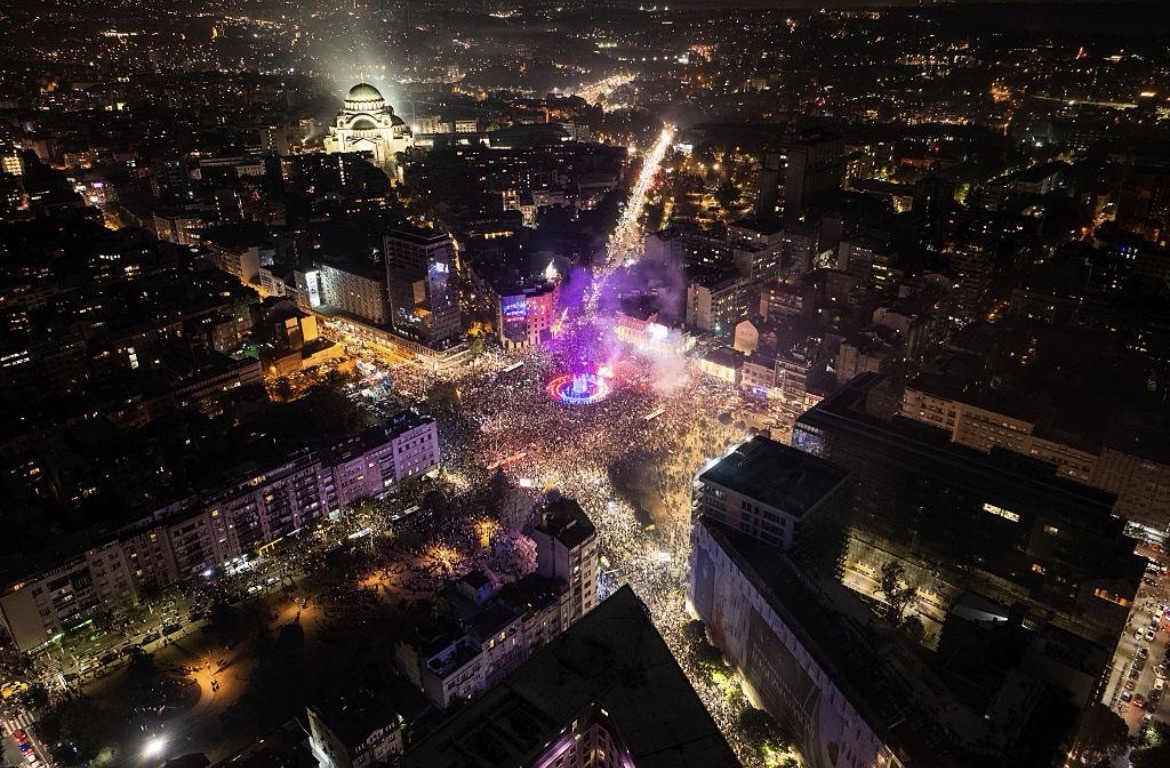
Serbia is facing a major political transition after President Aleksandar Vučić conceded defeat in a snap parliamentary election won by a student-backed opposition movement, marking a dramatic setback for the country’s long-dominant political establishment.
The movement, known as the Student List, secured a projected 52.9 per cent of the vote and 141 seats in the 250-member parliament, according to reporting by The Guardian. The result gives it a clear parliamentary majority and opens the way for a new government.
Protests that reshaped Serbian politics
The election victory follows nearly two years of student-led protests sparked by the November 2024 collapse of a railway-station canopy in Novi Sad, which killed 16 people.
The tragedy became a focal point for public anger over alleged corruption, government accountability and the functioning of state institutions. Students and other demonstrators subsequently demanded greater transparency and reforms to strengthen the rule of law.
What the new political movement promises
The Student List campaigned on accountability, institutional reform and tackling corruption. Its success demonstrates the extent to which public dissatisfaction can reshape a country’s political landscape.
However, the movement now faces the challenge of turning a broad protest coalition into an effective governing administration. Its positions on European Union membership, relations with Russia and other foreign-policy questions remain less clearly defined.
Implications for Europe
The result has attracted attention across Europe because Serbia occupies a strategically important position in the western Balkans. The country’s future relationship with the European Union, as well as its longstanding connections with Russia, will be closely watched.
EU officials have welcomed the election outcome and indicated that the bloc is prepared to support democratic reforms. The incoming leadership will need to demonstrate that it can strengthen institutions and maintain political stability while navigating competing international interests.
What happens next?
The immediate priorities are the formation of a new government, the transition of political authority and the implementation of promised reforms. Serbia must also hold a separate presidential election by the end of the year, according to the reporting.
The election marks a turning point, but the long-term significance of the victory will depend on whether the new political leadership can deliver the accountability and institutional changes demanded by its supporters.
