


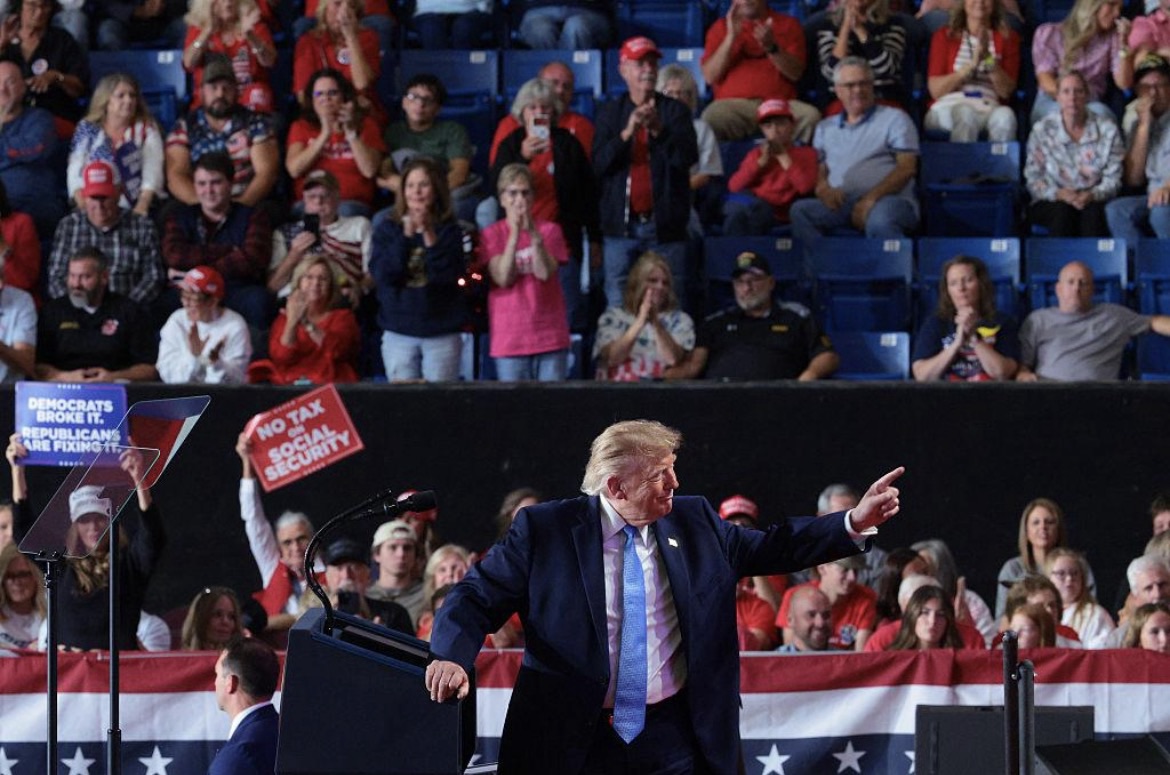
US President Donald Trump and his Republican Party are facing mounting political pressure as the November 3 midterm elections approach, with recent polling indicating that Democrats hold an advantage in the contest for control of Congress.
Trump has intensified his campaign appearances in support of Republican candidates, seeking to protect his party’s majorities in both chambers of Congress. However, concerns about the cost of living, rising fuel prices and the administration’s handling of the economy are emerging as significant challenges for Republicans.
A Reuters/Ipsos poll completed on October 26 found that Trump’s approval rating had risen slightly to 32 per cent, recovering from a record low. Nevertheless, Democrats maintained a lead over Republicans in the national congressional preference poll.
Cost of living dominates the campaign
Economic concerns are playing a central role in the election campaign. Voters have expressed frustration over inflation, household expenses and the cost of fuel, issues that could influence how Americans assess the president’s performance.
The Reuters/Ipsos survey found that 73 per cent of respondents believed the cost of living was moving in the wrong direction. Democrats also held a slight advantage when voters were asked which party would better manage the economy.
For Republicans, the challenge is to persuade voters that the administration’s policies will improve their financial circumstances. Democrats, meanwhile, are using economic dissatisfaction to encourage voters to challenge the president’s congressional allies.
Immigration and political divisions add to tensions
Immigration, national security and healthcare have also become major campaign issues. Political rhetoric has grown increasingly confrontational, with both parties accusing their opponents of pursuing policies that threaten the country’s interests.
Campaigning has also drawn attention to anti-Muslim rhetoric directed at Michigan Senate candidate Abdul El-Sayed. Democratic figures, including Bernie Sanders, have criticised such attacks, while the wider dispute has highlighted the intensity of political divisions ahead of voting day.
What happens on November 3?
The midterm elections will determine whether Republicans retain control of the House of Representatives and Senate. A Democratic victory in either chamber would limit the president’s ability to advance legislation and could increase congressional scrutiny of his administration.
Current polling suggests Democrats have a stronger opportunity to win the House, while the Senate presents a more difficult challenge. However, national polls cannot determine individual races, and the final outcome will depend on turnout and results in competitive states.
For Trump, the election is an important test of public confidence in his presidency. For Democrats, it offers an opportunity to regain congressional power and reshape the political balance in Washington.
