

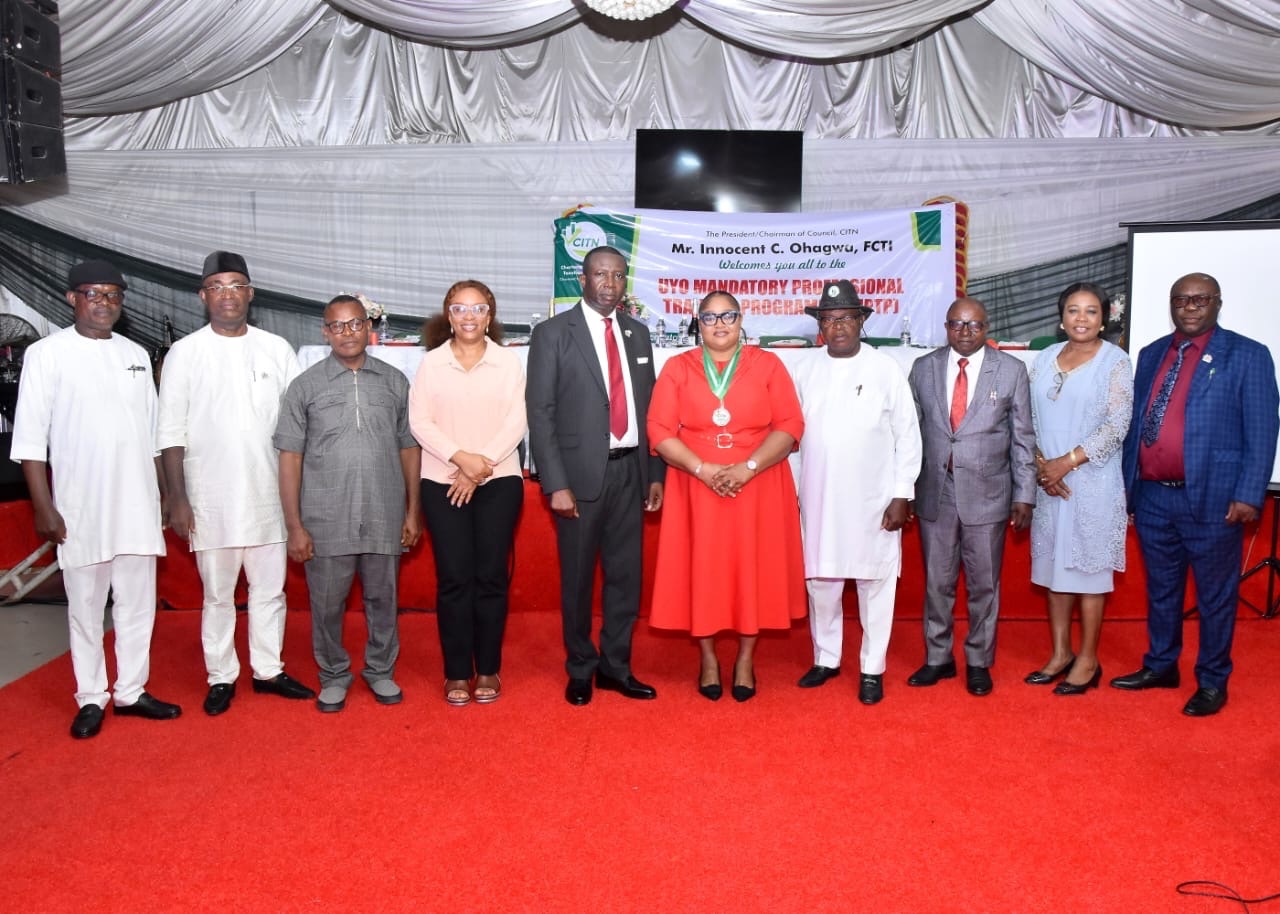
The Chartered Institute of Taxation of Nigeria (CITN), Uyo and District Society, has urged tax practitioners to strengthen taxpayer education and promote voluntary compliance as Nigeria implements its new tax framework.
The Chairman of the Society, Dens Idorenyin Charles William, FCTI, made the call on Thursday, October 29, 2026, during the Institute’s 2026 Physical Mandatory Professional Training Programme in Uyo, Akwa Ibom State.
Speaking at the event, William said continuous professional development was essential for tax practitioners to remain abreast of changes in tax laws, administrative processes, and the growing expectations of government, businesses, and taxpayers.
She noted that small and medium enterprises (SMEs) remained critical to economic growth, but that many businesses in the informal sector operated outside the formal tax system. She called for innovative approaches that would broaden the tax base through fairness, simplicity, taxpayer education, and trust rather than coercion alone.
The training focused on two areas of the Nigeria Tax Act, 2025: taxation of small and medium enterprises (SMEs) and the informal sector, as well as the taxation of individuals. The first technical session, titled “Taxation of Small and Medium Enterprises (SMEs) and the Informal Sector in Nigeria: Innovative Approaches for Broadening the Tax Base,” was delivered by Dr. Philip Eshiet. The second session, “Demystifying Nigeria Tax Act 2025: A Deep Dive into Taxation of Individuals,” was delivered by Prof. Raphael Etim.
The event was chaired by Pastor Nicholas Ekarika, who highlighted the importance of understanding the new tax framework, particularly the reliefs available to qualifying small companies and the revised progressive personal income tax structure. He cautioned that exemption from companies’ income tax did not automatically remove other applicable tax and compliance obligations, urging practitioners to guide businesses and individuals on their responsibilities under the law.
In a goodwill message, the Chairman of Akwa Ibom State Internal Revenue Service, Sir Okon Okon, commended William for what he described as her innovative and visionary leadership, citing the Society’s achievements and awards at national activities of the Institute. Okon also praised Governor Umo Eno for approving the reallocation of land to the Society in a choice location in Uyo, and welcomed the establishment of the Office of the Ombudsman, expressing optimism that it would pave the way for a Tax Regional Office in the State.
The training attracted students and professionals, with registered professionals who attended earning 15 professional development credit hours, and it also featured an interactive question-and-answer session.
