


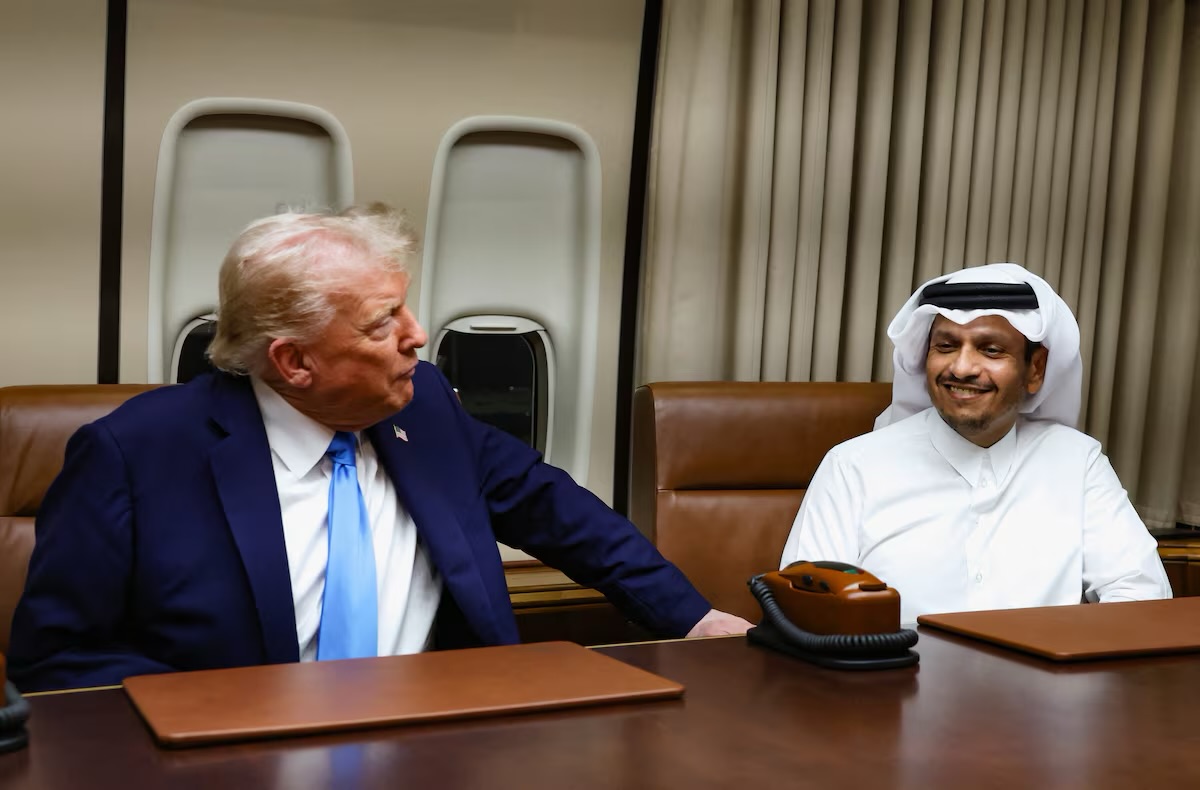
United States President Donald Trump is scheduled to meet Qatar’s Prime Minister and Foreign Minister, Sheikh Mohammed bin Abdulrahman Al-Thani, in Washington as diplomatic efforts intensify to end the ongoing war involving the United States, Israel and Iran.
The meeting comes amid growing international pressure to secure a ceasefire after more than eight months of conflict, which has destabilised the Middle East, disrupted global energy supplies and heightened security concerns around the strategically important Strait of Hormuz.
Sheikh Mohammed, whose country has played a major mediation role since the conflict began, is expected to hold discussions with Trump and US Vice President JD Vance. His visit follows engagements with Iranian officials in Tehran last week as Qatar continues efforts to bridge the differences between Washington and Tehran.
A major obstacle remains Iran’s proposed conditions for ending the conflict. Tehran has called for an end to the US blockade of its ports, the lifting of certain sanctions and a halt to American bombing. In return, Iran has indicated it would end its own blockade of the Strait of Hormuz, with negotiations on its nuclear programme and additional sanctions to follow.
However, the Trump administration has rejected the proposal. US Secretary of State Marco Rubio described Iran’s conditions as unrealistic, while Iranian Foreign Ministry spokesperson Esmaeil Baghaei defended the offer as a reasonable basis for negotiations.
Despite the renewed diplomatic engagement, officials have cautioned against expecting an immediate breakthrough. A senior United Arab Emirates official, Anwar Gargash, said a comprehensive political settlement remained difficult and warned that the region could face an extended period of uncertainty.
Military activities have also continued alongside the diplomatic efforts. Iranian state media reported that the United States carried out strikes on locations on Qeshm Island, although an Iranian provincial official said vital infrastructure and services were not affected. Washington had not publicly commented on the reported strikes at the time of the report.
Attacks involving commercial vessels in the Gulf and the Strait of Hormuz have also remained a major concern. The continued disruption of shipping routes has compounded the economic consequences of the war and contributed to global energy supply pressures.
The conflict has extended beyond the immediate confrontation between Washington and Tehran, with attacks involving regional actors affecting Gulf countries, Lebanon and Yemen.
For Qatar, the latest diplomatic engagement represents another attempt to prevent further escalation and find a negotiated path towards ending the conflict.
However, with both sides maintaining sharply different positions over sanctions, military operations, maritime security and Iran’s nuclear programme, the prospects for an immediate agreement remain uncertain.
The outcome of the Washington meeting could provide an indication of whether renewed mediation can move the parties closer to negotiations or whether the Middle East will remain trapped in a prolonged period of military and diplomatic uncertainty.
