


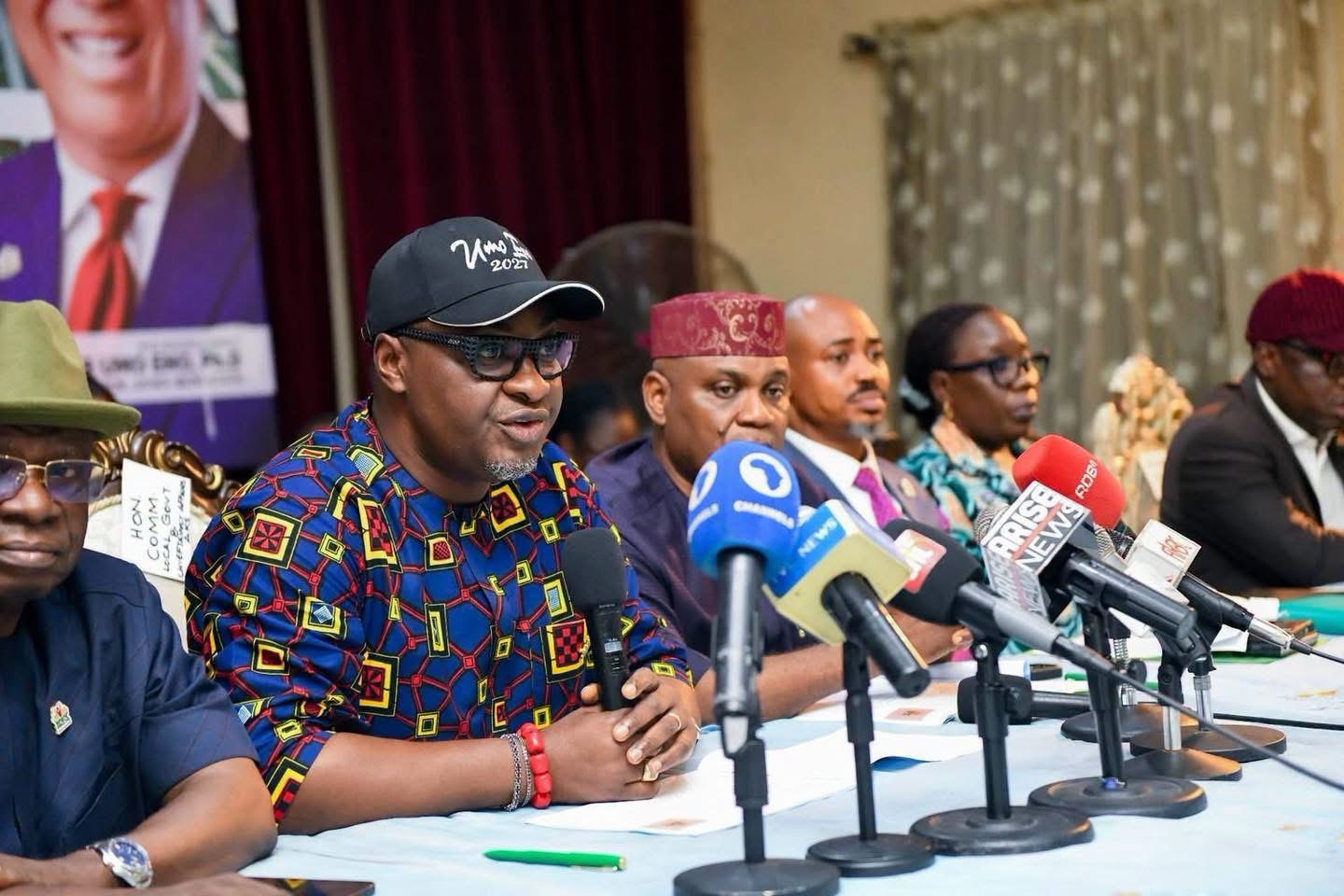
The Akwa Ibom State Government announced that it has paid N35.5 billion in gratuities to state and local government workers since the administration’s first three years, while introducing measures to strengthen traditional institutions, improve grassroots administration, and enhance community security.
The Commissioner for Local Government and Chieftaincy Affairs, Mr. Frank Archibong, disclosed this during the 13th Media Interactive Session in Uyo, where he presented the ministry’s achievements under Governor Umo Eno’s ARISE Agenda.
Mkpisong Archibong stated that the gratuity payments comprised N19.5 billion for state retired primary school teachers and N16 billion for retired local government workers, adding that the Governor had directed monthly financial interventions of at least N1 billion to address outstanding obligations and clear pension arrears owed to primary school teachers between 2013 and 2023.
On community security, the Commissioner revealed that 2,272 village youth presidents across the state had been screened and vetted in collaboration with the Ministries of Youth Development and Internal Security. He said the youth leaders had been handed over to the Commissioner of Police and the Director of the Department of State Services for security training before their engagement in their respective communities to strengthen community-based security and complement the state’s wider security architecture.
Regarding traditional institutions, Archibong said the administration had improved the welfare of royal fathers through monthly financial support, quarterly health assistance, and the provision of security boots for paramount rulers. He disclosed that all paramount rulers had received vehicles, while about seven whose previous vehicles had become unserviceable were given brand-new Toyota Prado SUVs, alongside a 22-seater Coaster bus provided to facilitate their collective movements, conferences, and peace-building initiatives.
Each paramount ruler, he added, had been assigned a personal assistant whose remuneration is at the level of Ward-Based Agents, while regular building programmes and workshops are being organized to strengthen traditional leadership. Furthermore, the ministry had processed 572 certificates of recognition for traditional rulers within the state, noting that interventions in chieftaincy disputes had helped reduce communal crises and restore stability in affected communities.
