


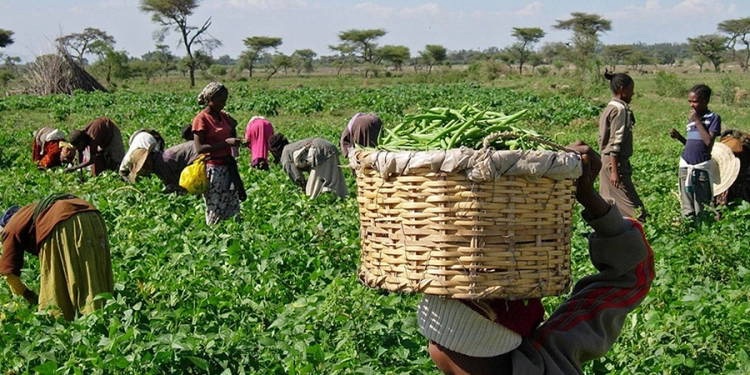
The Federal Government is planning major reforms in Nigeria’s agricultural sector, focusing on digital technology, mechanisation and improved coordination among government agencies to increase food production, strengthen food security and address rising food prices.
Professor Ademola Adenle, Senior Special Adviser on Agricultural Innovation to the Federal Ministry of Agriculture and Food Security, disclosed the proposed measures during an interview published on Wednesday, November 11, 2026.
Adenle explained that digitalisation would help the government identify genuine farmers, monitor agricultural production, improve transparency in the distribution of farm inputs and connect farmers to wider markets.
He said the National Agricultural Growth initiative had introduced a system through which agro-dealers distribute agricultural inputs to verified farmers and monitor their production outcomes.
According to him, the intervention has contributed to a 30 per cent increase in production, with annual wheat output rising from 420,000 tonnes to 480,000 tonnes.
However, the presidential adviser cautioned that increasing agricultural output alone would not automatically reduce food prices. He said structural problems, institutional weaknesses and inefficiencies across the agricultural value chain must also be addressed.
He identified bureaucratic bottlenecks and poor coordination among federal, state and local governments as major factors limiting the effectiveness of previous agricultural interventions. He therefore called for harmonised agricultural policies and stronger collaboration across the three levels of government.
Adenle also proposed performance-based financing, annual key performance indicators, improved monitoring and evaluation, data-driven decision-making and legislative measures to strengthen accountability in the sector.
On the rising cost of food, he identified the alleged hoarding of agricultural commodities and illegal movement of produce across Nigeria’s borders as factors contributing to artificial scarcity and market instability.
He said the Nigeria Customs Service and the Federal Competition and Consumer Protection Commission were working with security agencies to address the challenges.
The proposed reforms are expected to improve the government’s ability to monitor agricultural activities, direct interventions towards genuine farmers and strengthen the efficiency of food production and distribution.
For Nigeria, where food affordability remains a major concern for households, the success of the reforms will depend not only on increasing farm output but also on improving storage, transportation, processing, market access and coordination across the agricultural value chain.
The government is expected to face the task of translating the proposed measures into practical programmes that deliver sustainable benefits to farmers and consumers.
