


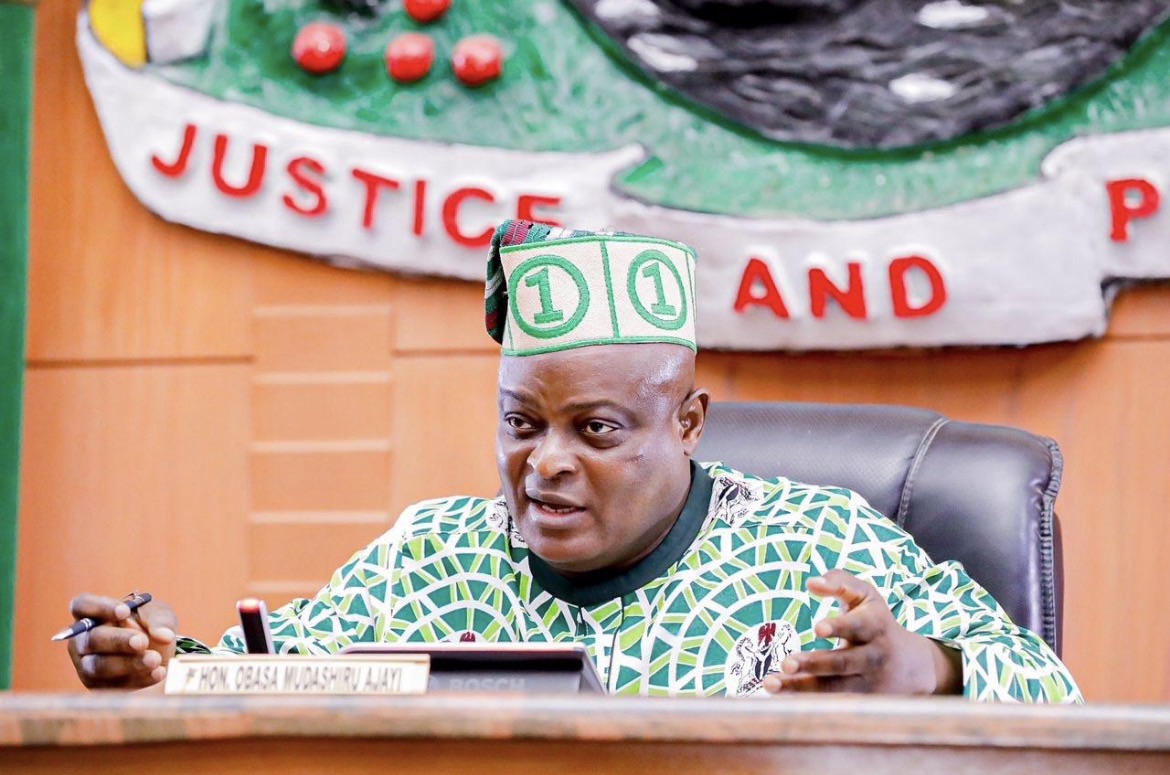
The Lagos State House of Assembly has endorsed the proposed creation of state police but called for constitutional changes that would give state governments clearer authority over their security services and define their relationship with the federal police.
The position was announced during plenary on Tuesday, October 27, as lawmakers considered the proposed 2026 constitutional amendment bill transmitted to state legislatures by the National Assembly.
Speaker Mudashiru Obasa described the proposal as an important step towards addressing Nigeria’s persistent security challenges. However, he warned that the reform could fall short of its objectives if states were not given sufficient control over the administration and operation of their police services.
Questions over control and accountability
Obasa argued that the constitutional amendment should clearly specify the responsibilities of federal and state police authorities to prevent overlapping powers and administrative conflicts.
He maintained that states needed meaningful authority to manage local security concerns, while urging lawmakers to address gaps in the proposed framework before the amendment process was completed.
The speaker also commended President Bola Tinubu, the National Assembly leadership and state legislatures for advancing the long-standing debate over decentralised policing.
Broader concerns about democratic institutions
Beyond state policing, Obasa called for dedicated security arrangements for legislative institutions, arguing that such measures could help protect lawmakers and preserve the independence of state assemblies.
He cited past disputes involving legislative complexes and alleged interference by governors, saying that stronger safeguards were necessary to prevent executive overreach.
The Assembly directed its clerk, Adenike Oshinowo, to formally communicate its resolution to the National Assembly.
The next stage
The proposed reform is being considered by state legislatures as part of the constitutional amendment process. Support from individual assemblies is an important step, but it does not by itself establish state police; the proposal must still satisfy the applicable constitutional requirements.
The debate also raises practical questions about funding, recruitment, training, oversight and protection against political misuse. Any new policing structure will need safeguards that protect citizens’ rights and ensure that security agencies remain accountable.
For Lagos and other states, the central challenge is to establish a system capable of responding more effectively to local threats without creating competing centres of authority or exposing policing to partisan control.
