


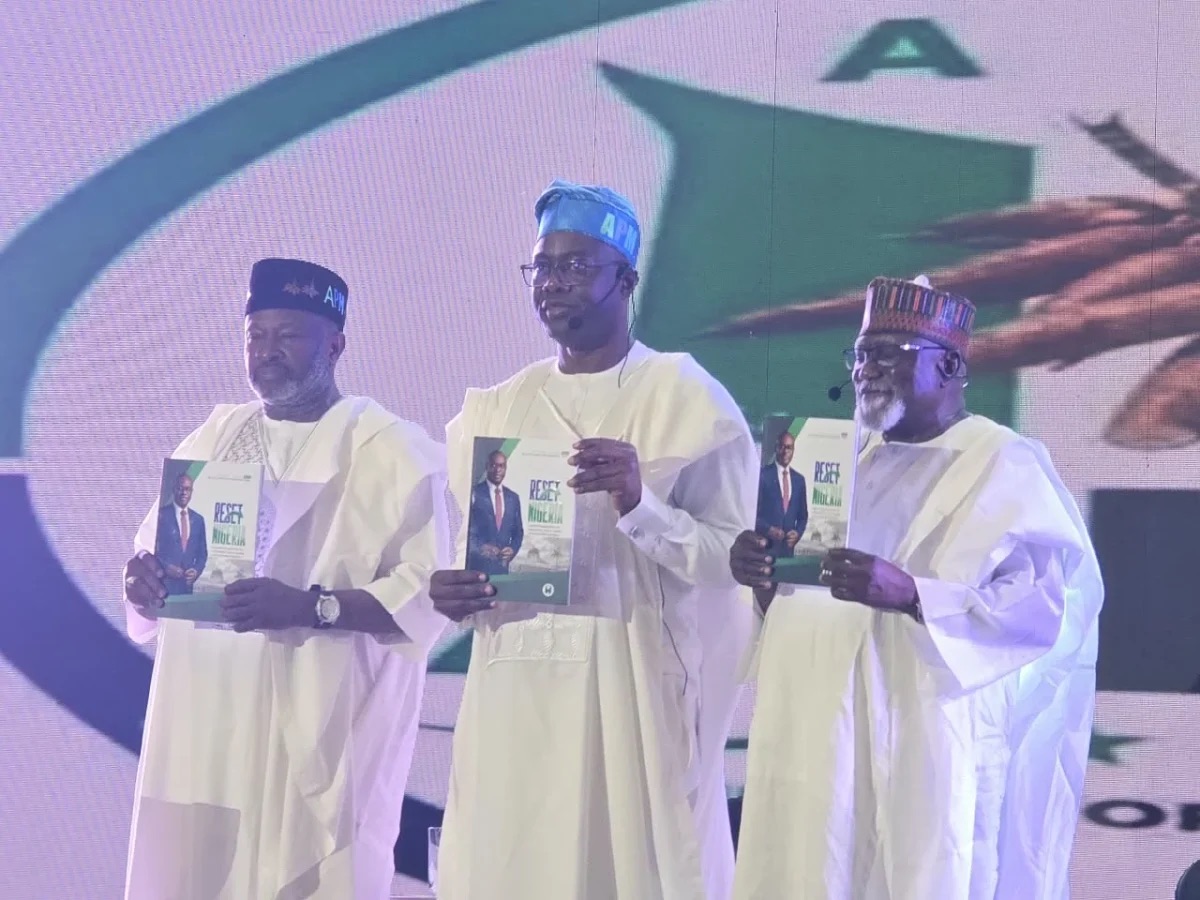
Oyo State Governor and presidential candidate of the Allied Peoples Movement (APM), Seyi Makinde, has unveiled his 2027 presidential manifesto, presenting a programme he describes as a national reset focused on economic recovery, security, education and political reform.
The manifesto, unveiled in Abuja on Wednesday, November 4, comes as opposition candidates intensify their campaigns against President Bola Tinubu ahead of the 2027 presidential election.
Speaking at the presentation, Makinde said Nigeria needed a new economic and political direction that would translate government policies into visible improvements in the lives of citizens.
He argued that economic reforms should not be measured only by macroeconomic indicators but by their impact on employment, household income, the cost of living and opportunities available to ordinary Nigerians.
The proposed Reset Nigeria Agenda is built around four major pillars: economic restructuring, security reform, education and the reorganisation of the country’s socio-political system.
Proposes changes to presidential election requirements
One of the major proposals in Makinde’s manifesto is a constitutional and electoral reform that would require a presidential candidate to secure at least 51 per cent of the votes to win an election.
The governor argued that the proposed threshold would encourage political parties and candidates to build wider alliances across ethnic, religious and regional divisions instead of relying on support from limited sections of the electorate.
He said the proposal was intended to promote national consensus and produce governments with broader electoral support.
Makinde also proposed a transitional government of national unity and a national conference where representatives of different sections of the country could discuss Nigeria’s political structure and agree on reforms.
His proposals would require constitutional and legislative processes before they could become law or government policy.
Promises economic relief and electricity reforms
On the economy, Makinde said his administration would prioritise reducing the cost of living and doing business.
He promised to introduce a system that would ensure Nigerians benefit more directly from increased crude oil revenue, particularly when earnings exceed government budget benchmarks.
He also proposed measurable performance targets within the first 100 days of his administration, alongside stronger accountability in public spending.
Electricity was another major component of the manifesto. Makinde said improving power supply would be a priority and proposed allowing states to generate and distribute electricity as part of a broader restructuring of the energy sector.
He maintained that the Federal Government should remain accountable for electricity improvements despite the legal changes that have expanded the role of state governments in the sector.
The governor also advocated a restructuring arrangement that would give states greater control over their resources and enable them to drive development according to their economic potential.
Security and education feature prominently
Under the security pillar, Makinde promised to restructure the country’s security architecture and strengthen institutions responsible for protecting lives and property.
His running mate, Lawal Musa Daura, described the proposed transitional administration as an inclusive four-year government that would focus on resetting the economy, education, security and the political system.
Daura also called for a national conference involving different segments of Nigerian society to discuss the country’s future and agree on a governance structure that accommodates competing interests.
The manifesto further identifies education as a priority area, although the success of the proposed reforms would depend on the policies, funding arrangements and implementation plans eventually adopted.
Criticism of current economic policies
Makinde criticised the disconnect between economic reforms and the daily experiences of Nigerians, arguing that government policies must produce practical benefits for citizens.
He also questioned the argument that petroleum prices must remain high to discourage the smuggling of fuel into neighbouring countries.
He maintained that Nigeria should strengthen border enforcement rather than allow citizens to bear the consequences of weak regulation.
The governor’s position presents a different approach to the country’s current economic direction, particularly on petroleum pricing, electricity and the distribution of oil revenue.
Opposition leaders react to the manifesto
The unveiling attracted opposition figures and political stakeholders, including APM National Chairman Yusuf Mamman Dantalle, who expressed support for the proposed agenda.
Dantalle criticised the rise in petroleum prices and argued that the cost of living had placed considerable pressure on ordinary Nigerians.
Lawal Daura also defended the need for a more inclusive political system, arguing that opposition parties must be allowed to operate freely in a democratic environment.
Makinde, however, urged Nigerians not to accept the manifesto without scrutiny. He encouraged citizens to examine its commitments, implementation timelines and assumptions, and to hold the proposed administration accountable for its promises.
The challenge ahead
The Reset Nigeria Agenda introduces a range of proposals covering economic management, constitutional reform, electricity, security, education and national unity.
However, translating these proposals into policy would require more than campaign declarations. Some would depend on constitutional amendments, cooperation with the National Assembly, negotiations with state governments and significant public financing.
As the 2027 election approaches, voters will have to examine not only the promises made by presidential candidates but also the practical steps, funding arrangements and timelines presented for implementing them.
For Makinde, the immediate task is to persuade Nigerians that his proposed national reset offers a workable alternative to the country’s current direction.
