


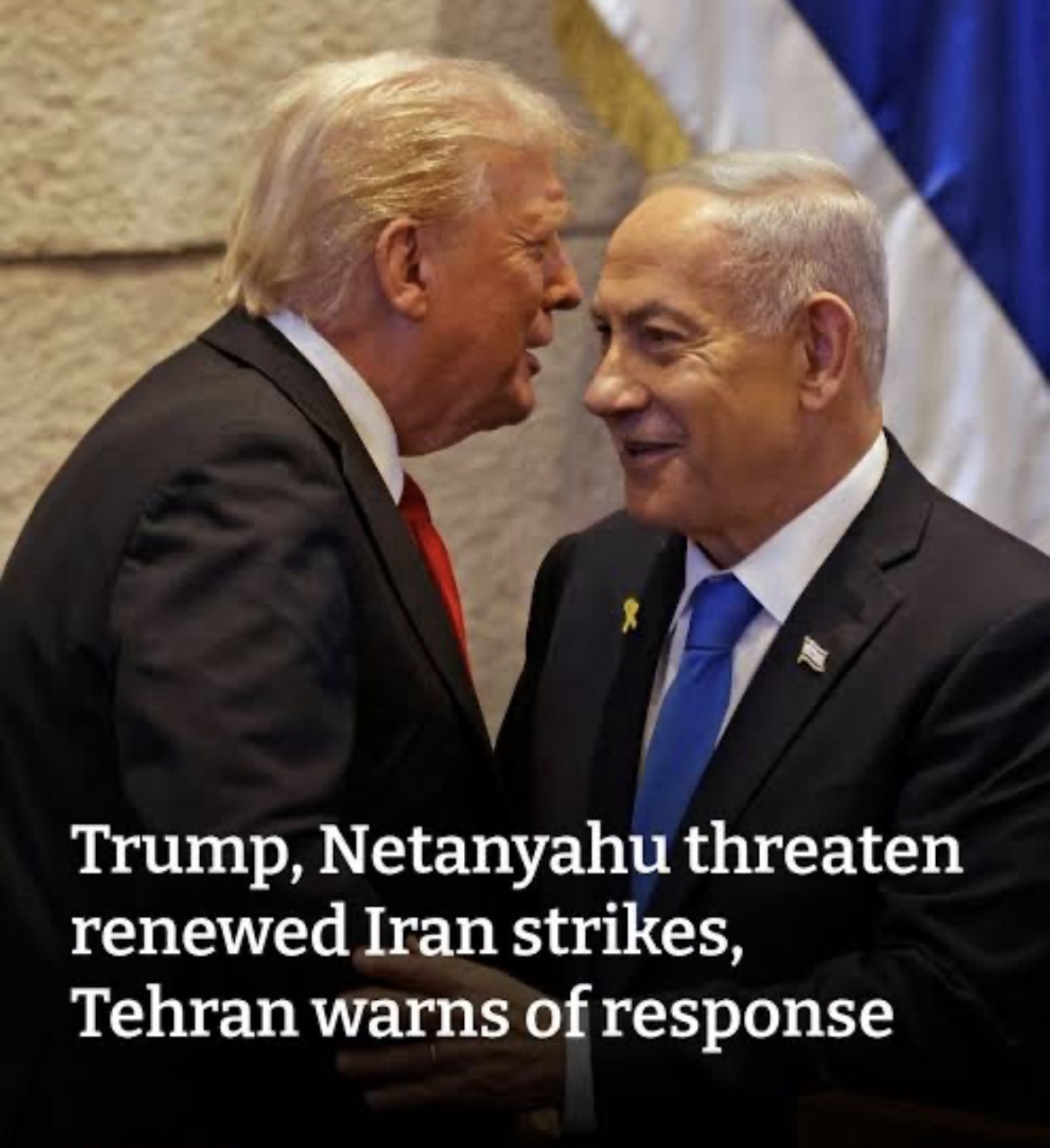
Iranians are increasingly worried that the conflict involving the United States, Israel and Iran could return to full-scale war, as political leaders intensify their rhetoric and diplomatic efforts show little sign of a breakthrough.
According to a report by the Associated Press published on Sunday, October 25, residents in Tehran are preparing for the possibility of renewed military strikes. Some are stockpiling food and medicine, while others are considering leaving the capital for safer areas.
Military threats heighten tensions
U.S. President Donald Trump has threatened to resume military action against Iran, while Israeli Prime Minister Benjamin Netanyahu has called for the elimination of Iran’s leadership. The developments have heightened concerns that the conflict could escalate again in the coming weeks.
The movement of additional U.S. military assets towards the region has added to the uncertainty, with some observers fearing that renewed attacks could follow the upcoming American midterm elections scheduled for November 3.
Economic hardship deepens
Beyond the security concerns, the conflict and restrictions on Iranian oil exports have placed additional pressure on the country’s already strained economy.
The Associated Press reported that food prices have risen sharply since the war began, with rice prices increasing by more than 60 per cent and beef prices by more than 150 per cent, according to figures cited in its report. Medicine shortages and disruptions to trade have added to the difficulties facing ordinary households.
For many families, the threat of renewed fighting now comes alongside the struggle to afford essential goods. Residents interviewed by the AP described buying extra supplies and making contingency plans in case the security situation deteriorates.
Diplomacy remains uncertain
Despite the mounting pressure, negotiations between Washington and Tehran have stalled. Iranian officials have accused the United States of undermining diplomatic efforts, while maintaining a defiant position against American demands.
The immediate concern for regional governments and the wider international community is whether diplomatic channels can prevent another escalation. Any renewed conflict could have consequences beyond the two countries, particularly for regional stability, international shipping and global energy markets.
What this means for the world
A renewed confrontation could threaten commercial shipping routes around the Strait of Hormuz, a strategically important passage for global oil supplies. Prolonged disruption could put further pressure on energy prices and increase economic uncertainty for countries that depend on imported fuel.
For now, the situation remains uncertain. The coming days will be important in determining whether diplomatic efforts can gain momentum or whether threats of renewed military action become reality.
