

The Akwa Ibom State Government has announced further progress in its electricity sector reforms, with plans to establish an independent state electricity market, rehabilitate Ibom Power Company and expand access to reliable electricity across the state’s 31 local government areas.
The reforms are aimed at repositioning the power sector as a catalyst for economic growth, industrial development, improved healthcare delivery and enhanced living standards.
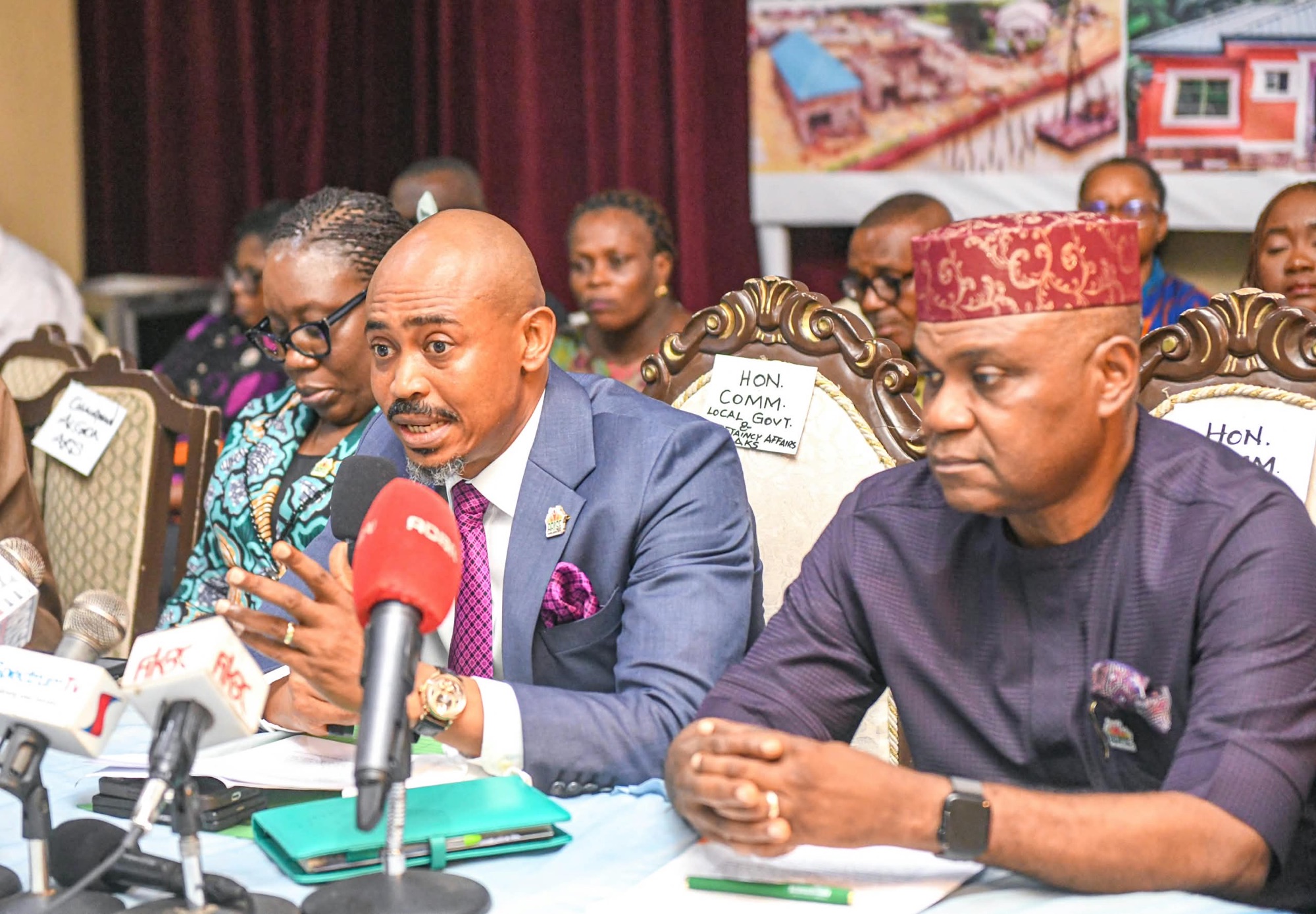
The Commissioner for Power, Hon. Iniobong Robson, disclosed this during a ministerial briefing in Uyo, where he presented an update on the implementation of the Akwa Ibom State Electricity Sector Reforms Programme.
Robson said the state had moved from policy formulation to institutional development, with the establishment of a state electricity regulator, an electricity investment holding company and plans for a state electrification agency.
He explained that the reform programme was anchored on three major instruments, the Electricity Act 2023, as amended; the Akwa Ibom State Electricity Policy; and the Akwa Ibom State Electricity Law 2025.
According to him, the legal framework provides the foundation for the state to regulate its electricity market, attract private investment and develop a sustainable power sector.
The Commissioner recalled that Governor Eno convened the Akwa Ibom Electricity Summit in Ikot Ekpene on September 18 and 19, 2025, where the state electricity policy and law were unveiled and the reform programme formally adopted.
At the summit, the Governor made commitments to rehabilitate and commercialise Ibom Power Company, establish a state electricity distribution company with government equity participation, license electricity operators and ensure that every household in Akwa Ibom enjoys quality electricity service by 2034.
Providing an update on implementation, Robson disclosed that Governor Eno constituted a seven-member implementation committee in April 2026, chaired by the then Executive Assistant and Chief Delivery Adviser to the Governor, Mr. Aniefiok Johnson.
The committee included representatives of the Ministry of Power, the Ministry of Local Government and Chieftaincy Affairs, among other stakeholders.
He explained that the involvement of local government authorities was necessary because the objective of the reforms was to achieve electricity sufficiency across all 31 local government areas.
The Commissioner also announced that the state had incorporated Ibom Electricity Holding Limited, IEHL, as the holding company for its electricity investments.
He said the company had commenced the process of regularising the state’s shareholding in key electricity assets, including Fourth Power Consulting Limited and Port Harcourt Electricity Distribution PLC, PHED.
Robson emphasised that the state government had not sold and had no intention of divesting its interest in Ibom Power Company Limited or relinquishing its equity rights in Fourth Power Consulting Limited and the proposed subsidiary distribution company to be created from PHED.
On the regulatory framework, he disclosed that Governor Eno inaugurated the pioneer five-member board of the Akwa Ibom State Electricity Regulatory Commission, AKSERC, on June 4, 2026, following screening and confirmation by the State House of Assembly.
The Commission is chaired by Mrs. Arit-Okon Uya.
He said AKSERC had been mandated to regulate electricity business transactions between buyers and sellers within the state and deliver measurable improvements in the electricity market.
The Commissioner further disclosed that the organisational structure and operational framework for the Akwa Ibom State Electrification Agency, established under Section 47 of the 2025 Electricity Law, had been completed and submitted to the Governor for approval.
The agency is expected to coordinate electricity access for towns, villages and communities that are not adequately served by the national grid.
A major development in the reform programme, according to Robson, was the issuance of Order Number NERC/2026/087 by the Nigerian Electricity Regulatory Commission on August 18, 2026, initiating the transfer of regulatory oversight of the Akwa Ibom electricity market to the state regulator.
With the development, Akwa Ibom becomes the 17th state in Nigeria to receive such a regulatory transfer order.
Under the order, PHED is required to incorporate a subsidiary responsible for electricity supply and distribution within Akwa Ibom State within 60 days.
The subsidiary is also expected to obtain the necessary operating licence from AKSERC, while all transfers specified in the order are to be completed by February 17, 2027.
Robson said Governor Eno had already received the board of directors of PHED in Uyo and called on the company to cooperate with the state government to ensure a smooth transition and protect the state’s commercial interests.
He added that the Ministry of Power, AKSERC and Ibom Electricity Holding Limited would work with PHED, the Bureau of Public Enterprises and other stakeholders to conclude the corporate, asset and staff arrangements required for the transition.
The Commissioner assured electricity consumers that the transition would not disrupt electricity supply, billing or customer care, adding that any changes would be communicated in advance.
On the rehabilitation of Ibom Power Company, Robson described the facility as a strategic asset in the state’s electricity development plans.
He said Akwa Ibom was among only two states in Nigeria to have established a grid-connected power plant since 1999, noting that Ibom Power and its associated gas supply arrangements would serve as anchors of the emerging state electricity market.
He disclosed that proposals from prospective private-sector partners for the concession of Ibom Power and the state’s distribution utility were currently under evaluation.
According to him, the proposed arrangement is intended to provide the financing and technical expertise required for the full rehabilitation, operation, maintenance and expansion of the facilities without selling the state’s investments.
He added that the government was also working to secure firm and long-term gas supply to guarantee sustainable electricity generation.
Beyond the existing grid network, the Commissioner announced plans to introduce a solar home system programme for households and small businesses in communities with poor or no reliable grid electricity.
He said the programme would be complemented by the training of Akwa Ibom youths in solar installation, operation and maintenance, ensuring that local residents benefit from employment opportunities created by the initiative.
On the implementation timeline, Robson said the state expected the incorporation of the Akwa Ibom electricity distribution subsidiary before the end of the fourth quarter of 2026.
He added that AKSERC would commence the publication of its initial regulatory instruments, covering engineering codes, licensing procedures, customer care frameworks and tariff methodology.
The procurement process for Ibom Power and the state distribution utility is expected to be concluded between the fourth quarter of 2026 and the first quarter of 2027, while the State Electrification Agency is also expected to become operational within the period.
The Commissioner, however, cautioned that the reforms would not translate into immediate electricity supply to every household, explaining that rebuilding a sector affected by years of inadequate infrastructure required time, expertise and sustained investment.
He identified the vandalism of electricity transformers and power lines as another challenge, urging residents to protect electricity infrastructure in their communities and report acts of vandalism.
In her contribution, the Chairman and Chief Executive of the Akwa Ibom State Electricity Regulatory Commission, Mrs. Arit Uya, said the Commission was working to establish a viable and financially sustainable electricity market capable of attracting investments into the state.
Uya explained that AKSERC’s responsibility was to ensure that operators across the electricity value chain, particularly those involved in generation and distribution, conducted their activities in accordance with established regulatory standards.
She said the Commission was developing the necessary regulatory instruments to guide operators and promote accountability within the electricity market.
The AKSERC Chairman expressed optimism that the state’s electricity resources and investment opportunities could position Akwa Ibom as a major electricity hub in Nigeria.
She maintained that the successful implementation of the reforms would benefit investors, residents and businesses across the state.
The electricity sector reforms represent one of the state government’s initiatives to strengthen infrastructure, promote private-sector participation and expand economic opportunities under the ARISE Agenda of Governor Umo Eno.
With the regulatory transfer process underway and plans for the rehabilitation of Ibom Power and the development of a state distribution company, the government says its immediate priority is to translate the new institutional framework into improved electricity services for residents and businesses.
The ultimate target remains the provision of quality and reliable electricity to every household in Akwa Ibom State by 2034.
